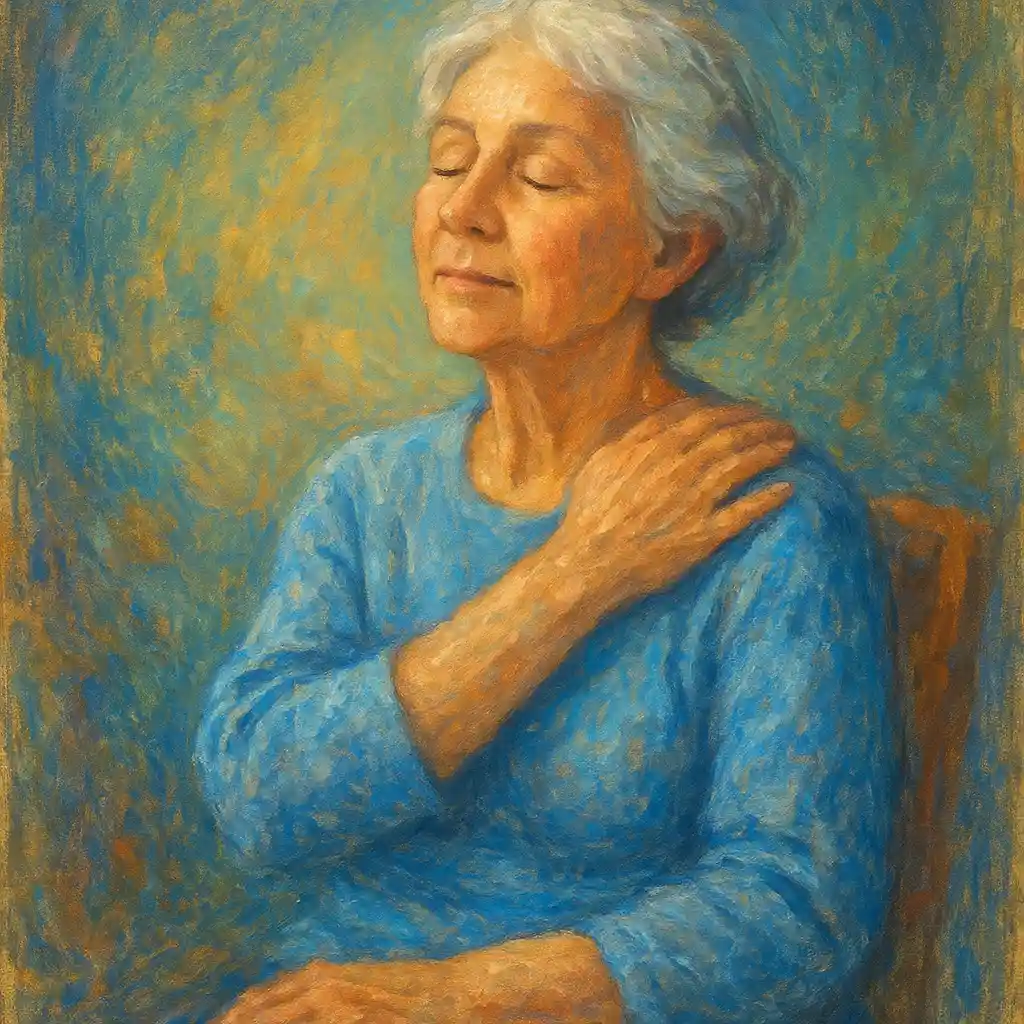
Neck and shoulder knots can turn normal days into difficult ones. Simple movements like looking over a shoulder, reaching into a cupboard, or sitting to read can start to feel uncomfortable. Over time, tight muscles may also affect sleep, mood, and confidence in movement.
This guide will provide insights on how to Release Neck and Shoulder Knots with simple techniques.
This blog post explains a gentle, natural method many seniors enjoy: guided imagery visualization. It is easy to learn, needs no special equipment, and fits well into a daily routine. Guided imagery does not “force” muscles to change. Instead, it uses the mind-body connection to support relaxation, calmer breathing, and a softer muscle tone. When the nervous system settles, tight areas often begin to loosen.
Contents
- Neck and shoulder knots: what they are and why they happen
- How knots affect daily life (especially for older adults)
- Guided imagery visualization: what it is
- Why guided imagery can help with pain and tension (simple science)
- Getting started: setup, posture, and breathing
- Guided imagery scripts to Release Neck and Shoulder Knots
- Building a daily routine that works
- Combining guided imagery with stretching and self-massage
- Extra support: ergonomics, movement, sleep, and stress care
- Safety notes and when professional help is needed
- Long-term results: what consistent practice can bring
- A simple 7-day starter plan
1) Neck and shoulder knots: what they are and why they happen
A “knot” is usually a tight, sensitive area in a muscle. Many people describe it as a hard spot, a tight band, or a sore point that hurts when pressed. Common places include:
- the upper trapezius (top of the shoulder)
- the neck muscles along the sides of the spine
- the area between the shoulder blade and the spine
Knots often appear when a muscle stays slightly “on” for a long time. For seniors, this can happen more easily because muscles may recover more slowly and joints may be stiffer than before.
Common causes include:
- Stress and worry: the body often tightens the neck and shoulders without notice
- Long sitting times: TV, reading, computer use, driving
- Poor posture: head forward, rounded shoulders, chin pushed out
- Low movement variety: doing the same positions daily
- Old injuries: muscles protect sensitive areas by tightening
- Dehydration and poor sleep: recovery becomes harder
- Arthritis or age-related changes: movement patterns may adapt and create tension elsewhere
The good news is that knots can often improve with a calm, steady plan that supports relaxation, circulation, and gentle movement.
2) How knots affect daily life for older adults
Neck and shoulder knots are not only uncomfortable. They can also change daily habits in quiet ways. Many seniors notice:
- less range of motion when turning the head
- stiffness after waking up or after sitting
- headaches that start from the neck
- tiredness from constant discomfort
- more tension during stress
- avoidance of activities that used to feel easy
When discomfort becomes normal, the body can stay in a “guarding” mode. That means muscles stay tight to protect, even when the danger is not real. A key goal is to help the nervous system feel safer and calmer. This is where guided imagery can help.
3) Guided imagery visualization: what it is
Guided imagery is a relaxation method using the imagination in a structured way. A person creates a calm picture in the mind, often with details like warmth, light, water, soft movement, or a safe place in nature.
This is not about pretending pain is not there. It is about giving the brain a different, calming message. The body often follows the brain’s signal. When the mind settles, the shoulders drop. The jaw softens. Breathing becomes slower. Muscles become less protective.
Understanding how to Release Neck and Shoulder Knots can improve overall well-being.
Guided imagery works especially well when combined with slow breathing and good posture support.
4) Why guided imagery can help Release Neck and Shoulder Knots (simple science)
Pain and muscle tension are strongly linked to the nervous system. When the body feels stress, it activates the “fight or flight” response. This can lead to:
- shallow breathing
- tight shoulders
- clenched jaw
- reduced blood flow to tense areas
- higher sensitivity to pain
Guided imagery supports the opposite state: “rest and digest.” This calmer state can lead to:
- slower breathing and heart rate
- reduced stress hormones
- lower muscle tone (less tightness)
- improved focus and coping
- a better sense of control
In simple terms: a calmer brain often creates a softer body. Over time, this makes it easier to Release Neck and Shoulder Knots gently.
Guided imagery is also useful because it is safe for most people and can be adapted for different needs and mobility levels.
5) Getting started: setup, posture, and breathing
Learning to Release Neck and Shoulder Knots aids in restoring comfort while moving.
As we explore how to Release Neck and Shoulder Knots, we’ll delve into the impact on daily life.
Choose a comfortable position
Pick one of these options:
- Seated: sit back in a chair with support behind the lower back
- Lying down: use a pillow under knees to relax the lower back
- Reclined: a recliner chair can be ideal for seniors
Support the neck and shoulders
- Keep the head balanced, not pushed forward
- Let shoulders rest down and back in a natural way
- Keep the jaw relaxed, tongue resting softly
Keep the session short at first
Start with 5–8 minutes. Increase to 10–15 minutes when it feels comfortable.
Techniques that help to Release Neck and Shoulder Knots often involve mindfulness and relaxation.
Breathing method for fast relaxation (easy and safe)
Use a slow, gentle rhythm:
- Inhale through the nose for 4 seconds
- Exhale softly for 6 seconds
- Repeat for 6–10 cycles
Longer exhales help calm the nervous system. If dizziness appears, return to normal breathing.
6) Guided imagery scripts to Release Neck and Shoulder Knots
These scripts are written in simple language and can be read slowly. They also work well as audio recordings.
Script 1: Warm Light Melting the Knots (8–10 minutes)
Sit or lie down comfortably. Let the hands rest loosely.
- Breathe in slowly. Breathe out slowly.
- Notice the weight of the body. Feel the support under the back, hips, and shoulders.
- Imagine a warm, gentle light above the head. The light is soft, not bright.
- With each exhale, the light moves down into the scalp, the forehead, and the eyes.
- The light moves into the jaw. The jaw becomes heavy and loose.
- The light flows into the neck. It brings warmth and space.
- Picture the tight spots in the neck and shoulders as small pieces of ice.
- The warm light touches the ice. The ice starts to melt slowly.
- With every exhale, the melt continues. The neck muscles lengthen. The shoulders lower.
- Imagine the melted tension flowing down the arms like warm water.
- Picture the shoulder blades resting wide and flat on the back.
- Stay with this image for a few breaths.
- Finish by saying silently: “My neck and shoulders are safe. They can soften now.”
- Return attention to the room. Move fingers and toes slowly. Open the eyes.
This script supports a feeling of safety, warmth, and release—key elements to Release Neck and Shoulder Knots.
Script 2: The Healing Stream (10–12 minutes)
Settle the body. Use slow breathing.
- Imagine a peaceful place in nature. A quiet stream runs through it.
- Hear the gentle sound of water. Feel the calm air on the skin.
- Imagine sitting near the stream. The body feels supported and safe.
- Bring attention to the neck and shoulders without forcing change.
- Imagine the stream begins at the base of the skull. The water is warm and clean.
- The stream flows down the neck, around tight muscles, and through the shoulders.
- The stream moves slowly, like a warm massage from inside.
- Each exhale lets the water carry away tightness.
- Picture the knot areas becoming softer and smoother.
- The stream continues down the arms, taking heaviness with it.
- Rest with this for several breaths.
- End by picturing the neck turning easily and the shoulders sitting level and relaxed.
- Return gently to the room.
This script is especially helpful when tension feels “stuck” and heavy.
Script 3: Gentle Unraveling (5–7 minutes, good for daily use)
- Take three slow breaths.
- Imagine a thin ribbon inside each shoulder. The ribbon is made of tension.
- With every exhale, the ribbon loosens slightly.
- Picture the ribbon unraveling on its own, without pulling.
- The neck becomes longer. The shoulders become wider.
- The chest feels open and easy.
- Finish with one calm breath and a slow shoulder roll.
This short script is useful during the day, including before errands or after sitting.
7) Building a daily routine that works
Guided imagery works best with consistency. The goal is not perfection. The goal is regular calming signals to the body.
A simple daily plan
- Morning (5–8 minutes): Script 3 or Script 1
- Afternoon reset (2–4 minutes): slow breathing + warm light on shoulders
- Evening (10–12 minutes): Script 2 to reduce stress before sleep
Effective methods to Release Neck and Shoulder Knots can be easily integrated into daily routines.
It’s beneficial to understand how to Release Neck and Shoulder Knots through gentle practices.
Best moments to practice
- after waking up
- after long sitting
- after stressful phone calls or appointments
- before bed
Keeping practice linked to a daily habit helps it become automatic.
8) Combining guided imagery with stretching and self-massage
Guided imagery is powerful alone, but it often works even better with gentle physical care. The key is staying gentle. Strong stretching can increase guarding, especially in sensitive areas.
Gentle stretch routine (3–6 minutes)
Move slowly. Avoid pain.
- Shoulder rolls: 8 circles backward, 8 circles forward
- Neck side tilt: bring ear toward shoulder slightly, hold 10–15 seconds each side
- Chin tuck: pull chin back gently as if making a “double chin,” hold 3 seconds, repeat 6 times
- Chest opening: clasp hands behind back (or hold a towel), lift slightly, hold 10 seconds
Pair the stretches with this mental image: warmth moving into the muscles, letting them soften.
Simple self-massage ideas (safe and easy)
- Warm shower water on the neck and shoulders for 2–3 minutes
- Warm compress for 10 minutes
- Tennis ball on the wall (not the floor): lean gently and roll slowly over tight spots
- Light fingertip circles on the upper shoulders
During massage, use a calm image: knots melting, shoulders dropping, breath flowing freely.
9) Extra support for long-term relief
Guided imagery helps most when daily habits stop feeding the tension.
Ergonomics for reading, phone, and computer
- Raise screens so the head stays level
- Support arms on armrests or pillows while reading
- Keep the book/tablet higher to avoid looking down for long periods
- Use a small pillow behind the upper back to reduce rounding
Movement snacks during the day
Even small movement breaks reduce knots.
Incorporating techniques to Release Neck and Shoulder Knots into your routine can improve comfort.
Follow these steps to Release Neck and Shoulder Knots effectively and enjoyably.
- Stand up every 30–45 minutes
- Walk around the room for 1–2 minutes
- Do 5 shoulder rolls and 3 slow breaths
Sleep support
- Use a pillow height that keeps the neck neutral
- Side sleeping: keep the head level, not falling down
- Back sleeping: a small towel roll under the neck can feel supportive for some people
Hydration and nutrition basics
- Drink water through the day
- Include protein and vegetables to support muscle recovery
- Reduce habits that increase tension, like long periods of clenched jaw or shallow breathing
Stress reduction for the neck
Stress often lives in the shoulders. Guided imagery helps, and these also help:
- calm music in the evening
- shorter news exposure
- gentle social contact
- light outdoor time
These habits lower the overall “tension load” on the body.
10) Safety notes and when professional help is needed
Guided imagery is generally safe, but neck pain sometimes has causes that need medical support.
Consult a healthcare professional if any of these appear:
- pain after a fall or accident
- numbness, tingling, or weakness in arms or hands
- severe headache with neck stiffness
- dizziness, fainting, or vision changes
- fever, unexplained weight loss, or night sweats
- pain that steadily worsens or does not improve with gentle care
Guided imagery can be used as a supportive tool, but it should not replace medical evaluation when symptoms are serious or new.
11) Long-term results: what consistent practice can bring
With regular practice, many seniors notice gradual improvements such as:
- fewer flare-ups of tightness
- faster recovery after stress or long sitting
- easier neck movement
- fewer tension headaches
- better sleep quality
- improved confidence in daily activities
The main benefit is not only pain reduction. It is a stronger sense of calm control. This changes the way the body responds to stress, and that supports lasting progress.
12) A simple 7-day starter plan to Release Neck and Shoulder Knots
This plan is short and realistic. It builds consistency without overload.
Day 1–2
- Morning: Script 3 (5 minutes)
- Evening: warm compress 10 minutes + 3 slow breaths
Day 3–4
- Morning: Script 1 (8 minutes)
- Afternoon: shoulder rolls + chin tucks (3 minutes)
- Evening: Script 2 (10 minutes)
Day 5–6
- Morning: Script 3 (5 minutes)
- Afternoon: tennis ball on wall (2 minutes gentle) + warm light image
- Evening: Script 1 (10 minutes)
Day 7
- Morning: Script 1 or 2 (10 minutes)
- Afternoon: stretch routine (5 minutes)
- Evening: Script 2 (10–12 minutes) + early bedtime support
After 7 days, continue with the same structure and adjust time based on comfort.
Conclusion: calm practice, steady results
Guided imagery visualization is a practical, gentle tool that fits well into daily life. It supports relaxation, lowers stress signals, and helps muscles soften naturally. Combined with simple posture support, light movement, and warmth, it becomes a complete approach to Release Neck and Shoulder Knots.
Progress often comes from repetition, not intensity. A few minutes each day can train the body to drop the shoulders, relax the neck, and breathe more freely. With time, the difference can show up in easier movement, better rest, and more comfort during daily tasks.
Commitment to Release Neck and Shoulder Knots can enhance daily life experiences.
Ultimately, learning to Release Neck and Shoulder Knots fosters long-term health benefits.
Guided imagery can be a powerful tool to Release Neck and Shoulder Knots effectively.