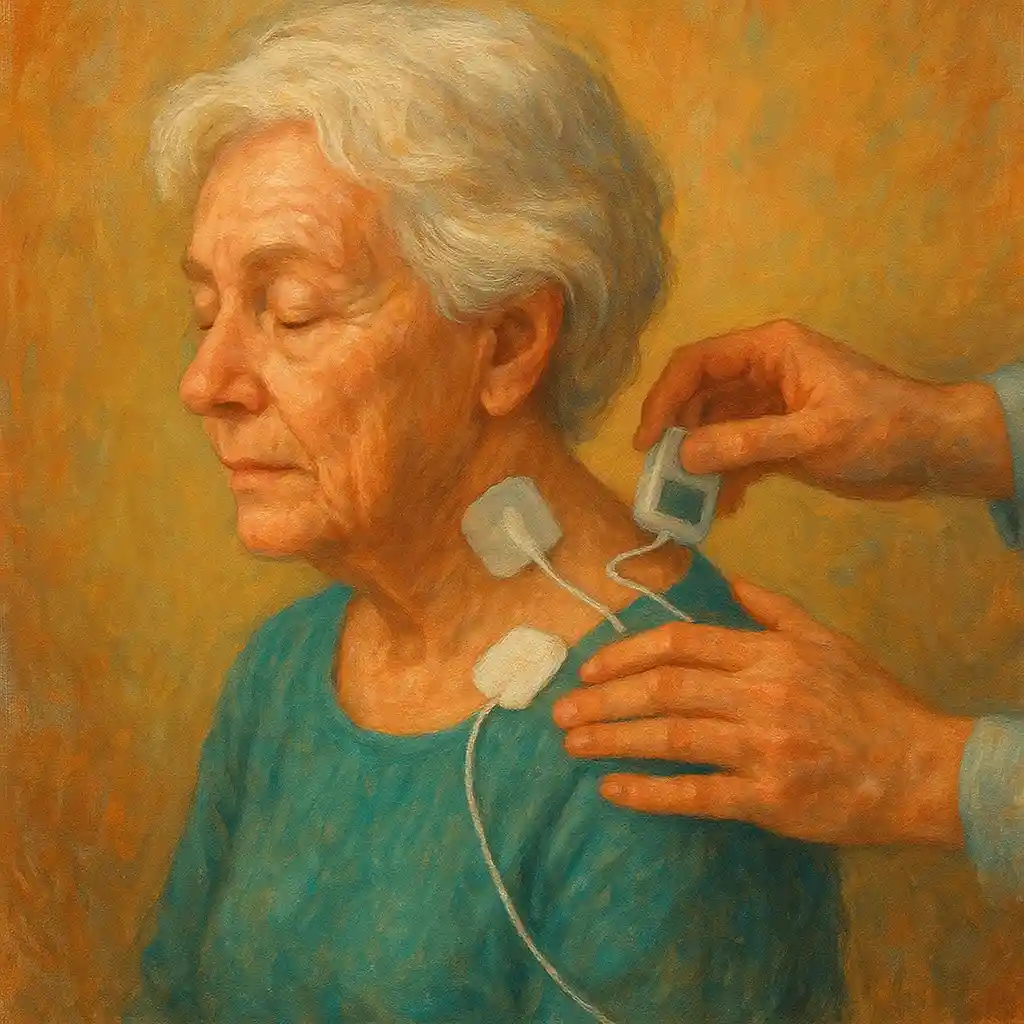
Neck pain is common in later life. It can come from stiff joints, tired muscles, arthritis, stress, or long hours in one position. Even simple tasks like reading, watching TV, cooking, or using a phone can lead to more tension in the neck and shoulders. When the neck is sore, sleep can suffer, mood can drop, and daily movement can feel harder.
One helpful tool for many people is TENS therapy. TENS stands for Transcutaneous Electrical Nerve Stimulation. It is a small device that sends gentle electrical pulses through sticky pads placed on the skin. Many seniors use TENS as a drug-free way to reduce pain and relax tight muscles.
This blog post shares clear, practical TENS Techniques for Seniors with Neck Pain, including safety rules, pad placement, settings, session length, and simple ways to get more relief. The goal is comfort, calm muscles, and better daily function.
1) Neck pain in seniors: common causes and why it matters
Neck pain is often caused by a mix of muscle tension and joint stiffness. In seniors, the most common reasons include:
- Arthritis and “wear and tear” changes in the cervical spine
- Muscle strain from posture, lifting, or sudden movement
- Long periods sitting with the head forward (TV, reading, phone use)
- Stress and anxiety, which can tighten the shoulders and neck
- Past injuries, including whiplash
- Weak upper back muscles, leading to more load on the neck
- Poor sleep position or the wrong pillow height
Neck pain can also affect:
- Turning the head while walking, driving, or cooking
- Shoulder movement and arm comfort
- Headaches that start from the neck
- Sleep quality and morning stiffness
- Confidence with movement and balance
TENS can support comfort so movement feels easier. Better movement often leads to less stiffness over time.
2) What TENS therapy is and how it helps neck pain
A TENS unit sends small pulses through the skin to nearby nerves. These pulses can help in two main ways:
Pain signal “blocking” (gate control)
The electrical pulses can reduce how strongly pain signals travel to the brain. Many people feel less pain during and after a session.
Natural pain-relief chemicals (endorphins)
Some TENS settings may support the body’s natural pain-relief response. This is often linked with lower-frequency patterns.
TENS is mainly used for pain relief and muscle relaxation. It is not the same as EMS (Electrical Muscle Stimulation), which is designed for stronger muscle contractions and strengthening.
3) Why many seniors like TENS for neck pain
Many people choose TENS because it offers several practical benefits:
- Drug-free support for pain control
- Non-invasive and usually easy to use at home
- Adjustable settings for comfort and sensitivity
- Portable, useful while resting, reading, or relaxing
- Can be part of a broader routine with stretching, heat, and posture work
Results vary from person to person. Some people feel strong relief quickly, while others need several sessions to find the best settings and placement.
4) Choosing the right TENS unit for neck use
Many TENS devices work well, but neck pain requires comfort and safety. Helpful features include:
Useful features for seniors
- Clear display and large buttons
- Timer with automatic shut-off
- Adjustable intensity in small steps
- Settings for frequency and pulse width (or several programs)
- Rechargeable battery (or easy battery replacement)
- Two channels, so left and right sides can be controlled
- Good quality electrode pads in smaller sizes (often more comfortable on the neck/shoulder area)
Pad quality matters
Better pads stick well, feel smoother, and reduce skin irritation. Seniors often have more delicate skin, so pad comfort is important.
5) Safety rules for using TENS on the neck
Safe use is the foundation of good results. The neck area has important blood vessels and sensitive structures. These safety points matter.
When to avoid TENS or get medical advice first
A healthcare provider should guide TENS use in these situations:
- Pacemaker, implanted defibrillator, implanted nerve stimulator, or similar device
- Heart rhythm problems or serious heart conditions
- Epilepsy or seizure history
- Pregnancy (especially near the torso)
- Cancer in the area, unless cleared by a provider
- Recent surgery near the neck area
- Severe numbness or reduced sensation where pads would go
- Broken skin, rash, infection, or open wound in the pad area
Where not to place pads on the neck
For neck use, these placement rules are essential:
- Do not place pads on the front of the neck
- Do not place pads on the throat
- Do not place pads so the current crosses from one side of the front neck to the other
- Avoid placing pads directly over the carotid artery area (front and side of the neck)
- Avoid the eyes, mouth, and head
A simple safe idea is to place pads on the upper shoulders and upper back, not on the throat.
Session safety habits
- Start at the lowest intensity and increase slowly
- The feeling should be strong but comfortable
- Avoid using TENS while sleeping, driving, or walking outdoors if it distracts attention
- Stop if there is dizziness, nausea, headache, or unusual symptoms
- Check the skin after each session for redness or irritation
6) Step-by-step setup: TENS Techniques for Seniors with Neck Pain
This setup routine improves comfort and helps the device work better.
Step 1: Prepare the skin
- Wash the area with mild soap and water
- Dry fully
- Avoid lotions or oils before placing pads
Step 2: Choose safe pad placement zones
Most neck pain comes from tight muscles in the upper shoulders and the back of the neck. Common safe zones include:
- Upper trapezius muscles (top of the shoulders, away from the throat)
- Upper back near the shoulders
- The back of the neck muscles, staying away from the front neck
Step 3: Place pads with space between them
- Keep pads at least 2 to 3 cm apart
- Do not overlap pads
- Use matching placement on left and right if pain is on both sides
Step 4: Turn on and raise intensity slowly
- Increase until there is a clear tingling sensation
- Stay below sharp, burning, or painful levels
Step 5: Use a timer
A common plan is 20 to 30 minutes, then remove pads and check the skin.
7) Best electrode placements for neck and shoulder tension
Neck pain often involves the upper trapezius and levator scapulae muscles, plus nearby upper back muscles. These placements often feel comfortable and safe.
Placement option A: Two pads on one side (for one-sided pain)
- Place one pad on the top of the shoulder (upper trapezius)
- Place the second pad slightly above or behind it on the same muscle area
- Keep both pads on the back/shoulder area, not the throat
Placement option B: One pad on each shoulder (for tension on both sides)
- Place one pad on the left upper trapezius
- Place one pad on the right upper trapezius
- This is often comfortable for general shoulder and neck tension
Placement option C: Four pads for wider coverage (two channels)
- Two pads on the left upper trapezius and upper back
- Two pads on the right upper trapezius and upper back
- This spreads the sensation and may feel smoother
If pain travels down the arm or includes numbness, a provider should check for nerve involvement. TENS may still help pain, but placement and diagnosis matter.
8) Understanding TENS settings in simple language
Many devices offer programs instead of full manual control. Both can work. It helps to understand the main settings:
- Intensity: how strong the pulses feel
- Frequency (Hz): how fast the pulses arrive
- Pulse width (microseconds, µs): how long each pulse lasts
- Mode: continuous, burst, or modulation patterns
The most important rule
The best setting is one that feels strong, safe, and comfortable, without sharp pain.
9) Recommended TENS settings for neck muscle relaxation
Below is a practical guide. These are common starting points used in many clinics and home plans. Personal comfort and medical advice always come first.
Quick settings table for seniors
| Goal | Frequency (Hz) | Pulse width (µs) | Intensity feel | Typical session |
|---|---|---|---|---|
| Calming tight neck muscles, general relaxation | 2 to 10 Hz | 150 to 250 µs | Strong but comfortable, may feel deeper | 20 to 30 min |
| Fast pain relief during a flare-up | 80 to 120 Hz | 50 to 100 µs | Comfortable tingling, usually no muscle twitch | 20 to 30 min |
| If the body gets used to one setting | 2 to 120 Hz (modulation) | 50 to 200 µs | Smooth, changing sensation | 20 to 30 min |
Low-frequency settings (2 to 10 Hz)
These can feel deeper and slower. Some people like them for longer-term or stubborn pain.
- Use 2 to 10 Hz
- Use 150 to 250 µs if the device allows it
- Keep intensity comfortable
- On the neck, avoid very strong contractions. Mild pulsing is usually enough.
High-frequency settings (80 to 120 Hz)
These often feel lighter and more “buzzing.” Many people prefer them for quick comfort.
- Use 80 to 120 Hz
- Use 50 to 100 µs
- Aim for a strong tingling feeling without pain
Pulse width and sensitivity
Seniors may have more sensitive skin. If the sensation feels sharp:
- Lower the intensity
- Lower the pulse width
- Move pads slightly to a more “fleshy” area on the shoulder
10) How long and how often to use TENS for neck pain
A simple, safe routine for many seniors looks like this:
- 20 to 30 minutes per session
- 1 to 3 sessions per day, depending on comfort and provider guidance
- Use the lowest total time that still gives good relief
A practical schedule:
- One session in the morning for stiffness
- One session later in the day after activity
- Optional short session in the evening for relaxation, not during sleep
If the device is used too long or too often, the body may get used to it and results may drop. Rotation of settings and placement can help.
11) How to get better results: key TENS Techniques for Seniors with Neck Pain
Small habits can make a big difference.
Keep the goal clear
TENS works best when the goal is pain relief and relaxation, not “pushing through” strong intensity. Higher intensity is not always better.
Create a calm session
- Sit in a comfortable chair
- Rest the shoulders
- Breathe slowly
- Let the neck stay in a neutral position
Tense body posture during TENS can reduce the relaxation effect.
Use a simple “settings log”
Write down:
- Placement choice
- Program name or frequency
- Pulse width if available
- Intensity level (or a 1 to 10 comfort score)
- Relief level after the session
This helps find the best pattern faster.
Use TENS at the right time
Many seniors get more benefit when TENS is used:
- After a long sitting period
- After light housework or walking
- During a planned rest break
- Before gentle stretching
12) Troubleshooting common TENS problems (and fixes)
Problem: The sensation feels too sharp or uncomfortable
Helpful fixes:
- Lower intensity first
- Reduce pulse width if possible
- Move pads slightly away from bony areas
- Check pad condition and replace old pads
Problem: No sensation or very weak sensation
Helpful fixes:
- Increase intensity slowly
- Replace pads if they are old or dry
- Clean the skin and dry fully
- Check cable connections and battery power
Problem: Skin irritation after use
Helpful fixes:
- Shorten session time
- Rotate pad placement each day
- Use hypoallergenic pads
- Keep skin clean and dry
- Do not place pads on broken skin
Mild redness can happen and often fades within an hour. Strong redness, itching, or blistering means stopping and getting medical advice.
Problem: Relief is inconsistent
Helpful fixes:
- Adjust placement closer to the tense muscle area
- Try a different frequency range
- Use modulation mode to reduce “getting used to it”
- Combine TENS with heat or gentle stretching
13) Combining TENS with other simple neck pain strategies
TENS often works best as part of a full routine. These add-ons are senior-friendly and low-risk when done gently.
Heat therapy
Heat can relax muscles and improve comfort.
- Use a warm pack for 10 to 15 minutes
- Then use TENS, or use heat after TENS
- Avoid heat on areas with poor sensation
Gentle stretching (slow and pain-free)
Stretching should be mild, not forced. Holding for 15 to 30 seconds is often enough.
- Upper trapezius stretch
- Sit tall
- Gently tilt the head to one side
- Keep the shoulder down on the side being stretched
2. Levator scapulae stretch
- Turn the head slightly toward one armpit
- Gently look downward
- Keep shoulders relaxed
3. Chest doorway stretch
- Stand in a doorway
- Forearms on the frame
- Step forward slightly to open the chest This helps posture by reducing forward shoulder position.
Simple posture reset (easy daily habit)
A short posture reset can reduce strain:
- Lift the chest gently
- Relax shoulders down
- Bring the head back slightly so ears line up over shoulders This is a small motion, not a hard “military posture.”
Pillow and sleep support
Many seniors do better with:
- A pillow that keeps the neck in a neutral line
- Avoiding very high pillows that push the head forward
- Side sleepers often need a thicker pillow than back sleepers
14) Real-life examples of safe, practical use
These examples show how consistent habits can help. Individual results vary.
Example 1: Morning stiffness and shoulder tension
A 70-year-old with morning stiffness used high-frequency TENS (around 100 Hz) for 25 minutes after breakfast. Pads were placed on both upper shoulders. The routine was followed with a warm shower and a gentle shoulder stretch. Over time, morning movement felt easier and daily tasks felt less irritating.
Example 2: Pain flare-ups after long sitting
A 76-year-old with neck tension from long TV watching used TENS in the afternoon with modulation mode. Sessions were 20 minutes with low intensity and a comfortable tingling feeling. A short posture reset was added every hour while sitting. Pain flare-ups became less frequent.
Example 3: Sensitive skin and inconsistent results
A 68-year-old had skin irritation from old pads and strong pulse width. Switching to new hypoallergenic pads, lowering pulse width, and rotating pad placement improved comfort. Relief became more stable.
15) A simple weekly plan for long-term neck comfort
Here is a clear routine that many seniors find manageable.
Daily
- TENS: 20 to 30 minutes, once or twice
- Gentle stretching: 3 to 5 minutes
- Posture reset: several times a day, especially during sitting
Two to three times per week
- Add light strengthening guided by a provider, such as shoulder blade squeezes
- Add a longer warm pack session before stretching
Consistency usually matters more than intensity.
Conclusion: steady relief with safe, smart TENS use
Neck pain can be exhausting, especially when it limits movement and sleep. TENS offers a practical, home-friendly option that many seniors use to reduce pain and relax tight muscles. The best results usually come from three things:
- Safe pad placement, staying away from the front of the neck
- Comfortable settings, not painful intensity
- Regular use, paired with heat, stretching, and posture habits
These TENS Techniques for Seniors with Neck Pain can support better comfort and a calmer neck and shoulder area. With a careful approach, TENS can become a simple and reliable part of a neck pain management routine.