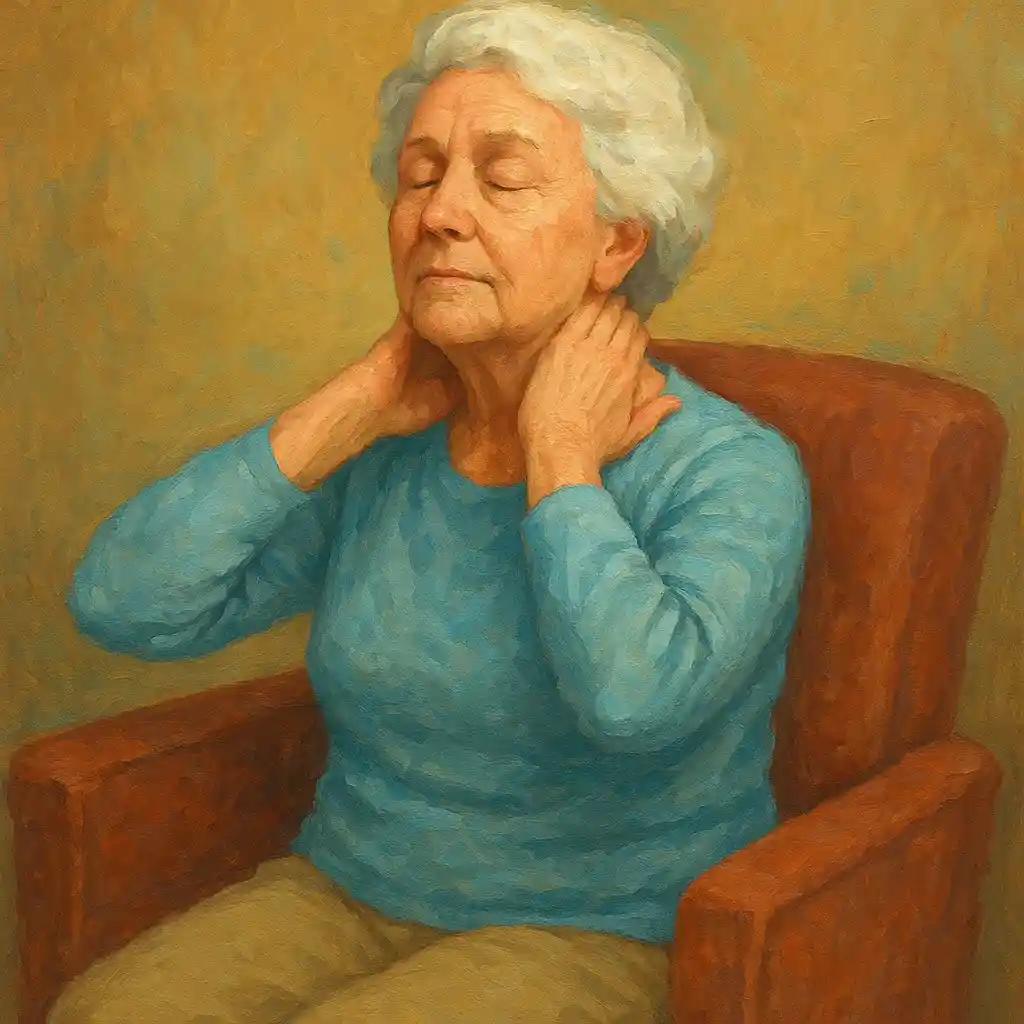
Neck pain can change daily life in quiet but powerful ways. It can make it harder to turn the head while driving, look down to read, reach a shelf, or sleep well. For many seniors, the neck also feels stiff in the morning and tight again later in the day. The good news is that small, steady exercises can often make a real difference.
One of the safest and most useful options is Isometric Neck Holds. These exercises build strength without big movements. They are gentle on joints, simple to learn, and easy to do at home. With good form and steady practice, Isometric Neck Holds can help reduce pain, improve posture, and support better movement in the neck and shoulders.
This guide explains how Isometric Neck Holds work, how to do them safely, and how to build a routine that fits real life.
1) Why neck pain is so common in seniors
Neck pain can come from many sources, and it is often not only one cause. Aging changes the muscles, joints, discs, and daily habits. The neck also works all day holding the head, which is heavier than many people think.
Common causes of neck pain
- Weak neck and upper back muscles When muscles are weaker, the neck has less support. The body may also tighten other muscles to “protect” the area, which increases tension.
- Arthritis and joint wear Over time, the small joints in the neck can become irritated or stiff.
- Disc changes Spinal discs can lose height and flexibility with age. This can reduce smooth motion.
- Poor posture A forward head position, rounded shoulders, or looking down for long periods can strain the neck.
- Long sitting time Staying in one position for a long time can reduce blood flow and increase stiffness.
- Stress and tension Stress often shows up in the neck and shoulders as tight muscles.
- Sleep position and pillow problems A pillow that is too high, too flat, or too soft can keep the neck in a poor position for hours.
How neck pain affects daily comfort
Neck pain is not only a neck problem. It can affect:
- Sleep quality
- Headaches
- Shoulder tension
- Mood and energy
- Balance confidence
- Enjoyment of normal activities
It also often leads to less movement. Less movement can mean less strength and more stiffness. This is one reason gentle strengthening is so helpful.
2) What Isometric Neck Holds are and why they work
Isometric exercises create muscle tension without moving the joint. In simple words, the muscle works, but the head stays still.
With Isometric Neck Holds, the neck muscles press gently against the hand or another stable surface. The goal is controlled effort, not force.
Why Isometric Neck Holds are a strong choice for seniors
- Low impact There is no fast movement, so the joints are not stressed in the same way as some dynamic exercises.
- Good for stiff or sensitive necks The holds can be done with small effort at first and slowly increased.
- Builds support and stability Stronger neck muscles help hold the head in a healthier position.
- Helps posture Neck strength and upper back support often improve head and shoulder alignment.
- Can reduce tension A stronger neck often becomes a calmer neck. Muscles do not need to “guard” as much.
- Quick and practical A full session can take five to ten minutes.
These exercises are not magic, but they are reliable. Most people do best with small daily work rather than rare hard workouts.
3) Safety rules before starting Isometric Neck Holds
Isometric Neck Holds are gentle, but safety still matters. Neck problems can sometimes involve nerves, blood vessels, or other medical issues. It is always wise to use a careful approach.
Check with a healthcare provider when needed
A doctor or physical therapist can help if any of these are true:
- Pain started after a fall, accident, or sudden injury
- Pain travels into the arm or hand
- There is numbness, tingling, or weakness
- There is dizziness linked to neck movement
- Headaches are new, severe, or unusual
- Pain is constant and does not improve with rest
General safety guidelines
- Use gentle effort Think of a light to medium push, not maximum strength. A helpful target is about 30 to 60 percent effort.
- No breath holding Breathe slowly during the hold. Breath holding can increase tension and blood pressure.
- No sharp pain Mild muscle effort is normal. Sharp pain is not.
- Stay in a neutral position Keep the head level, chin relaxed, shoulders down.
- Short holds are enough Quality matters more than long time.
- Stop if symptoms feel wrong A feeling of pressure, dizziness, nausea, or nerve symptoms is a sign to stop.
Simple warm-up
Before Isometric Neck Holds, use one minute to warm up:
- Sit tall and relax shoulders
- Take five slow breaths
- Do small shoulder rolls
- Gently turn the head left and right in a comfortable range
4) The best Isometric Neck Holds for seniors
The classic set includes pressing in four directions: front, back, left, and right. These cover the main neck muscle groups and support balanced strength.
For all holds below, follow these form basics:
- Sit or stand tall
- Keep shoulders down, not raised
- Keep the jaw relaxed
- Keep the head still
- Press gently and evenly
- Breathe slowly
A) Front Isometric Neck Hold (forward resistance)
Main goal: Strengthens the front neck muscles and helps control forward head posture.
How to do it
- Sit upright in a chair with feet flat.
- Place the palm of one hand on the forehead.
- Gently try to move the head forward into the hand.
- Use the hand to resist so the head does not move.
- Hold 5 to 10 seconds while breathing.
- Relax fully for 5 to 10 seconds.
Sets and repetitions
- Start with 5 holds
- Build to 8 to 10 holds over time
Make it easier
- Use lighter pressure and shorter holds, such as 3 to 5 seconds.
Make it harder
- Increase hold time gradually, up to 10 seconds.
- Increase effort slightly while keeping the face and shoulders relaxed.
B) Back Isometric Neck Hold (backward resistance)
Main goal: Strengthens the muscles at the back of the neck, which support upright posture.
How to do it
- Sit tall and look straight ahead.
- Place both hands behind the head, or use one hand if preferred.
- Gently try to press the head backward into the hand.
- Resist with the hand so the head stays still.
- Hold 5 to 10 seconds while breathing.
- Relax and repeat.
Important form tip Do not tip the head up. Keep the eyes level. The effort should feel like pushing straight back, not looking at the ceiling.
C) Side Isometric Neck Holds (left and right resistance)
Main goal: Strengthens the side neck muscles that support turning and side-bending.
How to do it
- Sit upright with shoulders relaxed.
- Place the right palm on the right temple area, above the cheekbone.
- Gently try to tilt the head toward the hand.
- Resist with the hand so the head stays still.
- Hold 5 to 10 seconds.
- Relax, then repeat on the other side.
Sets
- 5 holds each side to start
- Build to 8 holds each side
Common mistake Shoulders lifting toward the ears. Keep shoulders heavy and down.
D) Chin Tuck Isometric Hold (deep neck support)
This is a small hold that helps the “deep neck flexors,” which are important for posture and neck comfort.
How to do it
- Sit tall and look straight ahead.
- Imagine making a “double chin” gently.
- Slide the head straight back without tipping up or down.
- Hold the tuck gently for 5 seconds.
- Relax fully.
What it should feel like A mild effort in the front of the neck and a lengthening feeling at the back of the neck.
Why it helps Many people with neck pain have a forward head position. The chin tuck helps bring the head back over the shoulders.
5) A simple daily routine using Isometric Neck Holds
Consistency beats intensity for most neck problems. A short routine done often is usually more helpful than a long routine done rarely.
The 6 to 8 minute routine
Do this routine once per day or every other day.
- Warm-up breathing and shoulder rolls 1 minute
- Chin tuck isometric hold 5 holds of 5 seconds
- Front Isometric Neck Holds 5 holds of 5 to 10 seconds
- Back Isometric Neck Holds 5 holds of 5 to 10 seconds
- Side Isometric Neck Holds 5 holds each side of 5 to 10 seconds
- Easy neck stretch or shoulder blade squeeze 1 minute
This routine builds balanced support around the neck. It also fits into normal life, such as after breakfast or before evening TV.
A safe 4-week progression plan
Progress slowly. The neck responds better to calm, steady work.
Week 1
- Hold time: 5 seconds
- Effort: light
- Sets: 5 holds each direction
Week 2
- Hold time: 6 to 8 seconds
- Effort: light to medium
- Sets: 5 to 6 holds each direction
Week 3
- Hold time: 8 to 10 seconds
- Effort: medium
- Sets: 6 to 8 holds each direction
Week 4
- Hold time: up to 10 seconds
- Effort: medium, steady, controlled
- Sets: 8 holds each direction
If pain increases or stiffness becomes worse for more than a day, reduce effort and return to the prior week.
6) How to know it is working and how to track progress
Neck improvement can be gradual. Small changes matter. Tracking helps people notice progress they might miss.
Simple ways to track progress
Use a notebook or phone note and record:
- Pain level from 0 to 10 at the same time each day
- Morning stiffness level
- Comfort during normal tasks, such as reading, cooking, driving, or walking
- Sleep quality, especially waking with stiffness
- Range of motion improvements, such as turning head left and right
Progress often looks like:
- Less frequent pain
- Shorter pain episodes
- Less morning stiffness
- Better posture without effort
- Easier head turns
- Less shoulder tension
How to adjust intensity
Increase only one factor at a time:
- Hold time, such as 5 seconds to 8 seconds
- Number of holds, such as 5 to 7
- Effort level, staying under strong strain
Avoid high effort pushes. The goal is endurance and control, not heavy strength.
7) Common mistakes to avoid with Isometric Neck Holds
Good form makes the exercise safer and more effective.
Mistake 1: Holding the breath
Breathing is part of relaxation. Keep slow, calm breaths.
Mistake 2: Using too much force
Pushing too hard can increase pain and cause muscle guarding. Gentle steady pressure is better.
Mistake 3: Moving the head during the hold
Isometric means still. Movement changes the exercise and can irritate sensitive areas.
Mistake 4: Lifting shoulders
Raised shoulders load the upper trapezius muscles and can add tension. Keep shoulders down.
Mistake 5: Doing the exercises only when pain is strong
A small daily routine works best as prevention and support. Waiting for severe pain can make it harder to calm.
8) Extra daily habits that support neck health
Isometric Neck Holds help, but the neck also needs good daily support. Small lifestyle improvements can reduce strain.
Posture that protects the neck
- Keep ears over shoulders when sitting
- Keep screen at eye level when possible
- Support the lower back with a small pillow or towel roll
- Keep both feet on the floor to reduce overall tension
Smart breaks for screen time
A helpful pattern is:
- Stand up every 30 to 45 minutes
- Roll shoulders
- Do one gentle chin tuck
- Relax the jaw and breathe
Sleep support
- Use a pillow that keeps the neck level, not bent sideways
- Avoid sleeping with the head pushed far forward
- Side sleepers often need a thicker pillow than back sleepers
- Back sleepers often do well with a medium pillow and small towel under the neck for support
Gentle strength for the upper back
Neck pain often improves when the upper back is stronger.
A simple exercise:
- Sit or stand tall
- Squeeze shoulder blades back and down
- Hold 3 seconds
- Repeat 10 times
This pairs well with Isometric Neck Holds.
9) Gentle stretches to pair with Isometric Neck Holds
Stretching can be helpful after strengthening, especially when the neck feels tight. Stretches should be slow and comfortable.
A) Upper trapezius stretch
- Sit tall.
- Let the right hand rest by the side or hold the chair.
- Tilt the head gently left.
- Hold 15 to 30 seconds.
- Switch sides.
B) Levator scapulae stretch
- Sit tall.
- Turn the head slightly right.
- Look down toward the right armpit.
- Use the right hand gently on the back of the head for a light stretch.
- Hold 15 to 30 seconds.
- Switch sides.
C) Chest opener stretch
Tight chest muscles can pull shoulders forward.
- Stand near a doorway.
- Place the forearm on the door frame.
- Step forward gently until a stretch is felt across the chest.
- Hold 15 to 30 seconds.
- Switch sides.
Stretching should never create sharp pain. Mild pulling is enough.
10) The mind-body link: stress and neck tension
The neck and shoulders often react to stress. Muscles may tighten without notice. This tension can increase pain and reduce range of motion.
Simple relaxation methods that help
- Slow breathing for one minute before Isometric Neck Holds
- Relaxing the jaw and tongue during holds
- A short body scan while sitting, releasing shoulders downward
- Light walking to increase blood flow and reduce stiffness
Using mindfulness during Isometric Neck Holds
Mindfulness here means paying attention to the body in a calm way.
- Notice effort level
- Notice shoulder position
- Notice breathing speed
- Choose to reduce tension in the face and jaw
This small change can make the holds feel smoother and safer.
11) Warning signs and when to seek help
Most muscle soreness after new exercise is mild and improves in one or two days. Some symptoms are not normal and should be taken seriously.
Stop Isometric Neck Holds immediately if any of these occur
- Sharp or stabbing neck pain
- Dizziness, faint feeling, or nausea
- New headache that feels severe
- Blurred vision
- Trouble speaking, swallowing, or walking steadily
Seek medical help soon if any of these occur
- Pain that spreads into the arm with numbness or tingling
- Weakness in the hand or arm
- Pain after a fall or injury
- Fever, chills, or unexplained weight loss with neck pain
- Pain that stays strong and constant, even at rest
Safety always comes first.
12) Common concerns and misconceptions
Concern: Neck exercises should hurt to be effective
Effective neck work feels like controlled muscle effort, not sharp pain. Mild muscle fatigue can be normal. Sharp pain is a sign to reduce effort or stop.
Concern: Isometric Neck Holds are too small to matter
Small holds can change muscle endurance and control. The neck often needs steady support more than heavy strength.
Concern: Results should happen fast
Some people feel relief in days. Many need several weeks of consistent practice. Improvement is often gradual and steady.
Concern: Arthritis means exercise is unsafe
Many people with arthritis improve with gentle strengthening. A healthcare provider can guide the best approach.
13) Real-life examples of improvement
Small daily practice often leads to noticeable changes.
- Mary, age 72 had morning stiffness and avoided turning her head while driving. After adding Isometric Neck Holds and short posture breaks, she reported less morning tightness and easier head turns.
- John, age 68 felt neck tension during reading and TV time. After two weeks of gentle holds and shoulder blade squeezes, he noticed fewer tension headaches and better comfort in the evening.
These results come from steady routines and calm effort.
Conclusion: Stronger neck support, better daily comfort
Isometric Neck Holds offer a practical path to less neck pain and more confidence in daily movement. They are gentle, easy to learn, and effective when done with good form and steady consistency. Combined with better posture, short movement breaks, light stretching, and stress reduction, they can help many seniors feel more comfortable in everyday life.
A short routine done most days builds the best results over time. Small changes in strength and tension can add up to a bigger change in comfort.
Sharing this article with a friend or family member can help someone else find a safe starting point for neck pain relief.