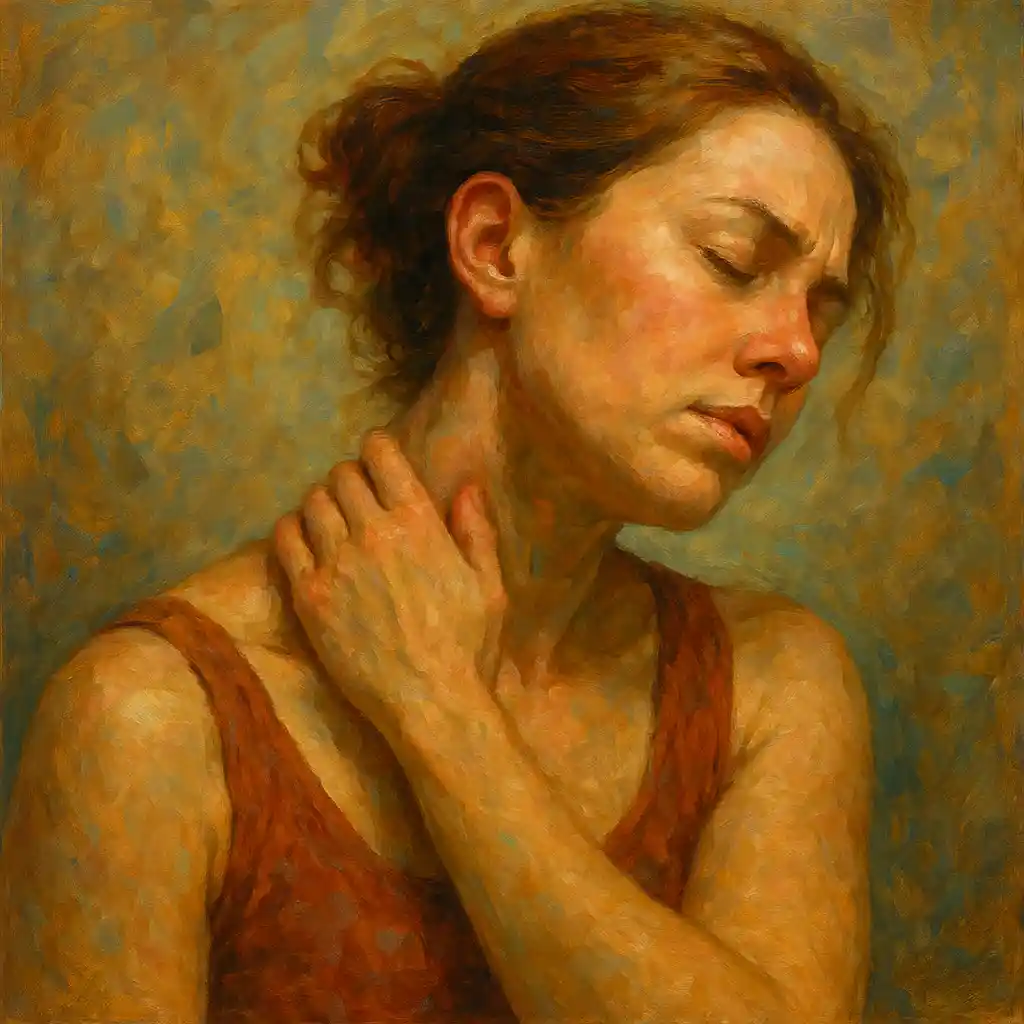
One-sided neck pain can feel unfair. The rest of the body may feel fine, but one tight spot on one side of the neck can limit movement, disturb sleep, and make daily tasks harder. Simple things like reading, driving, cooking, or looking down at a phone can become uncomfortable when the neck feels stiff and sore.
Self-massage is a practical tool for this problem. It is not a “magic fix,” and it does not replace medical care when needed. Still, it can be a strong part of a long-term plan. With a gentle routine, the muscles can relax, blood flow can improve, and movement can feel easier again.
This guide focuses on one common muscle behind one-sided neck pain, especially in seniors: the levator scapulae. You will learn what it does, why it often gets tight, and how to massage it safely using your hands and simple tools.
Understanding One-Sided Neck Pain
One-sided neck pain means pain that is stronger on the left or right side. It can feel like:
- A tight band from the top of the shoulder up into the side of the neck
- A “knot” near where the neck meets the shoulder
- Sharp pain when turning the head
- Stiffness after sleep
- Pain that increases after sitting or looking down
- A headache that starts near the base of the skull
In seniors, one-sided neck pain often comes from a mix of daily habits and age-related changes. Common causes include:
- Poor posture while sitting, reading, or using screens
- Muscle tension from stress or guarding the neck
- Sleeping position that keeps the head turned or tilted
- Arthritis and joint stiffness in the neck
- Weak shoulder and upper back muscles, making the neck work too hard
- Carrying bags on one side or holding a phone between ear and shoulder
Many people try to stretch the neck, but stretching alone does not always help. Tight muscles often need both gentle movement and soft tissue release. This is where self-massage can add real value.
The Levator Scapulae Muscle, Explained Simply
The levator scapulae is a muscle on each side of the neck. It connects:
- The upper part of the neck (the cervical spine)
- To the top inner corner of the shoulder blade (the scapula)
Its main jobs are:
- Lifting the shoulder blade
- Helping turn and tilt the head
- Helping stabilize the neck and shoulder
When the levator scapulae becomes tight, it often creates one-sided pain because it works more on one side. This can happen when:
- The shoulders round forward
- The head sits forward in front of the body
- One shoulder is raised more than the other
- The neck stays turned to one side for long periods
- Stress makes the shoulders “creep up” without noticing
A tight levator scapulae often feels like a sore, sensitive line from the top of the shoulder up toward the neck. Sometimes it also causes pain that spreads up behind the ear or toward the base of the skull.
A helpful detail: this muscle often responds well to slow pressure and steady massage, not fast rubbing.
Why Self-Massage Works for One-Sided Neck Pain
Self-massage supports recovery in several ways. It can:
Improve blood flow
Gentle pressure increases circulation in tight areas. Better blood flow can support healing and help muscles relax.
Reduce muscle tension
Massage can calm the nervous system and lower the “protective” muscle guarding that keeps the area tight.
Ease trigger points
A trigger point is a sensitive spot in a tight muscle. It can feel like a small knot. Pressing it gently and slowly can reduce pain over time.
Improve range of motion
When the muscle relaxes, turning the head often feels smoother. Movement becomes less “blocked.”
Build body awareness
Self-massage teaches you where you hold tension. This makes posture changes easier, because you start noticing early signs of tightness.
Support better sleep
A calmer neck often leads to fewer wake-ups and less morning stiffness.
Safety and Precautions for Seniors
Self-massage should feel safe and helpful. It should not feel aggressive or risky. These tips keep it safe and effective.
Talk to a healthcare provider first when needed
Professional guidance matters, especially if you have:
- Osteoporosis or fragile bones
- A history of neck injury
- A herniated disc or known spine condition
- Blood clotting problems
- Strong dizziness or balance issues
- Any new pain that started after a fall or accident
Use gentle pressure
A good rule is a pressure level around 3 to 6 out of 10. It can feel tender, but it should stay under control. Sharp pain is a stop sign.
Avoid pressing on bones and the front of the neck
Massage the muscle, not the spine bones. Also avoid deep pressure on the front and sides of the throat where sensitive structures sit.
Stop and get medical help if any red flags appear
Seek professional care if you notice:
- Numbness, tingling, or weakness in an arm or hand
- Pain shooting down the arm
- Trouble with balance or coordination
- Fever, chills, or unexplained weight loss
- Severe headache unlike your usual pattern
- Pain that keeps worsening over time
- Pain after a fall, car accident, or strong impact
Self-massage is for common muscle tension and mild to moderate pain patterns. Strong nerve symptoms need expert care.
Tools That Make Self-Massage Easier
Hands alone can work well. Tools can help you reach the right spot without straining your fingers.
Helpful options
- Your hands and fingertips: best for gentle control
- Massage oil or lotion: reduces skin friction and feels smoother
- Warm towel or heating pad: relaxes muscle before massage
- Tennis ball: low cost and effective
- Massage ball: firmer than a tennis ball, good for trigger points
- Foam roller: useful for upper back and shoulder areas
- Thera cane or hook massager: helpful if shoulder mobility is limited
A simple suggestion for seniors
Start with a tennis ball and a warm towel. This combination is easy, safe, and often enough.
A Simple Self-Massage Routine for Levator Scapulae Pain
Total time: 8 to 12 minutes
This routine is designed for one-sided neck pain connected to levator scapulae tension. Do it once per day to start. Many people like it in the evening or after long sitting.
Before you begin
- Sit in a stable chair with back support, or stand with feet hip-width apart
- Let your shoulders drop down gently
- Breathe slowly through the nose if possible
Step 1: Warm up the area (1 to 2 minutes)
Warm muscles release more easily. Choose one:
- Warm towel on the side of the neck and top of the shoulder for 1 to 2 minutes
- Warm shower before the routine
- Gentle shoulder rolls: 10 slow circles backward
Then add one easy movement:
- Chin tuck: pull the chin back slightly as if making a “double chin,” then relax. Do 5 to 8 slow repeats.
- Keep it small and smooth
- Avoid forcing the neck
Step 2: Find the levator scapulae (30 seconds)
To locate the muscle, use this simple map:
- Touch the top of your shoulder
- Move your fingers slightly inward toward the neck
- Find the area where the neck meets the top of the shoulder
- The levator scapulae often feels like a tight cord running from that area toward the side/back of the neck
Stay off the spine bones. Work more on the soft, meaty area.
Step 3: Hand massage for the levator scapulae (3 to 4 minutes)
Choose the hand on the opposite side. For example, if the pain is on the right side, use the left hand across the body.
Technique A: Slow kneading
- Place fingertips or thumb on the tight area at the top of the shoulder near the neck.
- Make small, slow circles.
- Move up and down a small range, about 2 to 3 centimeters.
- Keep pressure gentle to moderate.
Do this for 60 to 90 seconds.
Technique B: Pinch and lift (gentle grasp)
This works well when the muscle feels thick and “stuck.”
- Gently grasp the soft muscle between fingers and thumb.
- Lift it slightly away from the deeper tissues.
- Hold for 2 seconds, then release.
- Repeat slowly 8 to 12 times.
This should feel relieving, not sharp.
Technique C: Trigger point hold
Use this only on one or two spots.
- Find the most tender knot.
- Press gently and hold still for 15 to 30 seconds.
- Keep breathing slowly.
- Release slowly and rest 5 seconds.
A good sign is that the tenderness softens a little as you hold.
Step 4: Massage ball method against a wall (2 to 3 minutes)
This method is excellent for seniors because the wall supports your body and lets you control the pressure with your legs.
- Stand with your back near a wall.
- Place a tennis ball between the wall and the sore area at the top of the shoulder, close to the neck.
- Lean in gently until you feel mild pressure.
- Roll slowly in tiny movements, up and down or in small circles.
Then add a steady hold:
- Pause on a tender spot for 15 to 25 seconds
- Keep your jaw relaxed and shoulders down
- Step away from the wall to reduce pressure if it feels too strong
Safety note: keep the ball on the muscle area, not on the spine bones.
Step 5: Finish with gentle stretch and reset (1 to 2 minutes)
After massage, muscles are warm and more ready to stretch. Keep it gentle.
Levator scapulae stretch (soft version)
- Sit tall.
- Turn your head about 30 to 45 degrees away from the sore side.
- Gently nod the chin down toward the armpit.
- Hold 15 to 25 seconds.
- Repeat once.
Do not force the stretch. It should feel like a mild pull, not pain.
Then finish with:
- 3 slow breaths
- One more set of 5 shoulder rolls backward
- A sip of water if available
Making Self-Massage Part of Daily Life
Consistency matters more than intensity. A small routine done often helps more than a long routine done once in a while.
A simple weekly plan
- Week 1: 8 minutes per day
- Week 2: 10 to 12 minutes per day, add posture breaks
- Week 3 and beyond: 4 to 6 days per week for maintenance
Short “micro-break” reset (30 seconds)
Use this during the day, especially after screen time:
- Sit tall
- Drop shoulders down
- Do 3 chin tucks
- Do 5 shoulder blade squeezes
- Take 1 slow breath
This helps prevent the levator scapulae from tightening again.
Combine with calm breathing
Massage works better when the body feels safe and relaxed. A simple pattern:
- Inhale for 4 seconds
- Exhale for 6 seconds
- Repeat for 5 breaths during massage
Longer exhales help the nervous system settle.
Posture and Ergonomics Tips for Seniors
Many one-sided neck pain patterns are posture-driven. Small changes reduce strain on the levator scapulae.
Sitting and screen setup
- Keep the screen at eye level
- Keep elbows close to the body
- Support the lower back with a small cushion
- Keep feet flat on the floor
- Avoid leaning forward with the chin reaching out
Phone and reading habits
- Avoid holding the phone between ear and shoulder
- Use speakerphone or headphones when possible
- Hold books or tablets higher, closer to eye level
- Use a pillow under the arms while reading to reduce shoulder lift
Sleep support
- Use a pillow that keeps the head in line with the spine
- Avoid sleeping with the head pushed far forward
- Side sleeping often works well when the pillow fills the space between shoulder and ear
- If you sleep on your back, a thinner pillow may help keep the neck neutral
Carrying items
- Avoid heavy bags on one shoulder
- Use a backpack with two straps when possible
- Switch sides often if you carry something by hand
These steps reduce daily overload on one side of the neck.
Gentle Exercise and Stretching for Neck Health
Self-massage works best with light strengthening and movement. Stronger upper back muscles mean the neck does not have to “hold everything.”
Safe and simple exercises (3 to 5 minutes)
Do these 3 to 4 times per week.
Shoulder blade squeeze
- Sit or stand tall
- Pull shoulder blades back and slightly down
- Hold 3 seconds
- Repeat 10 times
Wall angels (small range)
- Stand with back against a wall
- Keep ribs down and chin slightly tucked
- Slide arms up a little, then down
- Repeat 8 times
- Keep it comfortable
Band rows (light resistance)
- Use a light resistance band
- Pull elbows back close to the body
- Keep shoulders down
- Repeat 10 to 12 times
Gentle daily mobility
- Slow neck turns left and right, 5 times each side
- Slow ear-to-shoulder tilt, small range, 3 times each side
- Shoulder rolls backward, 10 times
The goal is calm movement, not stretching hard.
Food and Hydration for Muscle Recovery
Muscles recover better when the body has enough water and nutrients.
Hydration tips
- Drink water through the day, not only at meals
- Keep a bottle or glass visible as a reminder
- Include water-rich foods like soups, fruits, and vegetables
Dehydration can increase muscle cramps and stiffness, especially in seniors.
Foods that support muscles and lower inflammation
- Fatty fish like salmon or sardines for omega-3 fats
- Olive oil, nuts, and seeds for healthy fats
- Leafy greens like spinach and kale
- Berries for antioxidants
- Ginger and turmeric in meals or tea
- Protein at each meal to support muscle repair, such as eggs, yogurt, beans, chicken, or tofu
Supplements that may help
Some seniors consider supplements for muscle recovery. These can interact with medications, so medical advice is important.
Common options to discuss with a provider:
- Magnesium for muscle relaxation in some people
- Vitamin D if levels are low
- Omega-3 fish oil for inflammation support
Supplements help most when paired with movement, posture care, and good sleep.
Real-Life Success Stories (Simple, Realistic Examples)
Maria, 73, morning stiffness on the right side
Maria woke up with a tight right neck most mornings. She started using a warm towel for one minute, then did the tennis ball method on the wall for two minutes, followed by a gentle stretch. After two weeks, she reported fewer painful mornings and easier head turns while driving. She kept the routine short and steady, not intense.
George, 68, neck pain after computer time
George noticed pain mainly after long screen use. He added a 30-second posture reset every hour and did hand massage in the evening. After three weeks, his pain levels dropped, and he felt less tension in the top of his shoulder. His biggest improvement came from raising his screen and relaxing his shoulders.
Linda, 77, one-sided tightness with headaches
Linda had tightness on the left side of her neck that sometimes led to headaches near the base of her skull. She used slow trigger point holds and calming breathing. She also started shoulder blade squeezes three days per week. Over time, her headaches became less frequent, and her neck felt less “locked.”
These stories show a clear pattern: gentle daily action builds results.
When Professional Help Is the Best Next Step
Self-massage is helpful, but it is not the right answer for every situation.
Professional support is important when:
- Pain lasts more than a few weeks with no improvement
- Pain keeps returning quickly
- Symptoms spread into the arm or hand
- Movement becomes more limited over time
- Daily life and sleep are strongly affected
Helpful professionals for seniors include:
- Primary care doctor for assessment and safe next steps
- Physical therapist for movement, posture, and strength plans
- Licensed massage therapist for manual release and guidance
- Chiropractor for joint-related care when appropriate
- Orthopedic specialist or neurologist when nerve symptoms appear
Complementary options that some seniors find useful include:
- Heat therapy
- Acupuncture
- Gentle supervised exercise programs
- Relaxation training for stress-driven tension
The best plans often combine home care with professional guidance.
A Long-Term Plan for Managing Chronic Neck Pain
Long-term neck comfort usually comes from a few steady habits.
Track progress simply
Use a small notebook or phone note and record:
- Pain level from 0 to 10
- What makes it worse
- What helps
- How far the head turns comfortably
Small improvements matter. Less morning stiffness, fewer headaches, or easier movement are all wins.
Adjust the routine based on results
- If massage feels too sore the next day, use less pressure and shorter time
- If it feels good but returns fast, add posture breaks and light strengthening
- If stretching increases pain, reduce the stretch and focus on massage plus gentle motion
Stay patient and consistent
Muscles and joints change slowly. Many seniors feel clear progress in 2 to 4 weeks when they keep the routine gentle and regular.
Conclusion: Calm the Muscle, Restore Movement, Take Control
One-sided neck pain often comes from tight muscles, posture strain, and daily tension patterns. The levator scapulae is a common cause, especially when shoulders lift and the head moves forward over time.
Self-massage gives a safe, practical way to reduce tension and improve comfort at home. With a warm-up, gentle hand techniques, a tennis ball against the wall, and a soft stretch, many people feel real relief. When combined with better posture, small movement breaks, light strengthening, hydration, and supportive foods, the results can last longer.
Start small. Keep it gentle. Make it consistent. A calm daily routine can turn one-sided neck pain from a constant problem into a manageable, improving condition.