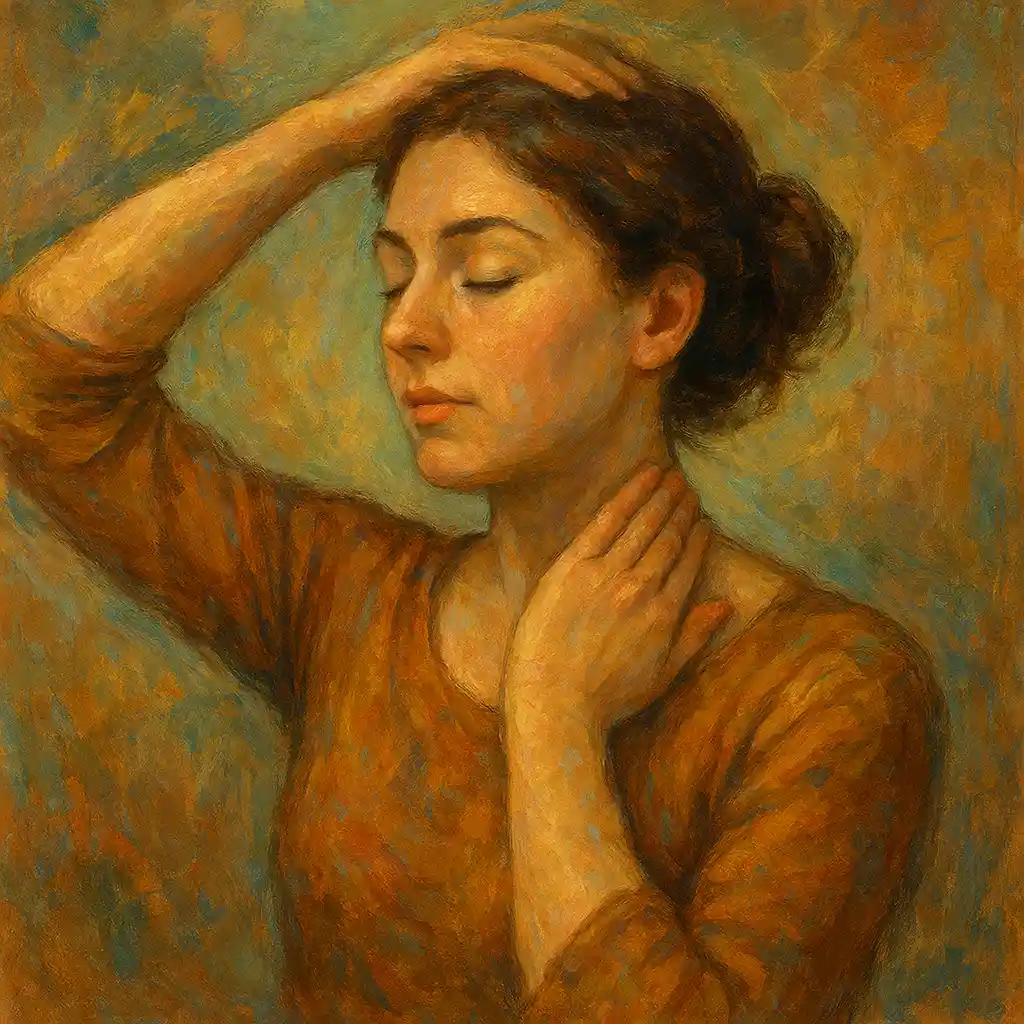
Self Reiki positions for stress-induced neck pain can be a gentle, practical way to ease tension in your neck and shoulders—especially when stress seems to “sit” in your body. If you have ever noticed your shoulders creeping up toward your ears or your neck feeling stiff after a worrying day, you are not alone. Reiki is an ancient Japanese technique for relaxation and stress reduction that also supports healing. With a short daily self-care routine, you can create a calm moment, invite your body to relax, and support long-term comfort.
When stress tightens your neck, a few minutes of calm touch, slow breathing, and clear intention can help your body shift from tension to relief.
This post shares a clear, senior-friendly approach: how stress affects the neck, what Reiki is, how to prepare, and step-by-step self Reiki positions for stress-induced neck pain you can practice at home. The goal is simple: help you feel more comfortable, more relaxed, and more in control of your well-being.
Why Stress Can Cause Neck Pain (Especially for Seniors)
Stress does not only live in the mind. It often shows up in the body. Many people notice that during stressful times, their muscles tense without them even realizing it. The neck and shoulders are common places for this tension to gather.
For seniors, stress-induced neck pain can feel even more challenging. Age-related stiffness, reduced flexibility, and existing discomfort can make the neck more sensitive to daily tension. When stress becomes chronic, the body can stay in a “tight” state for longer periods, and the neck muscles may not fully relax.
The stress–tension connection in the neck
When you feel stressed, your body may respond by tightening muscles as a protective habit. Over time, this can lead to:
- Muscle tightness in the neck, shoulders, and upper back
- Stiffness that makes turning your head harder
- Aching or soreness that can last all day
- Reduced comfort during sleep, especially if you carry tension into bedtime
How chronic stress can affect the whole body
Chronic stress can feel mentally draining, but it can also affect your physical comfort. It may contribute to ongoing tension patterns: shoulders lifted, jaw clenched, shallow breathing, and a tight neck. When the body stays in this pattern, it can be harder to “reset” without a calming routine.
This is where a gentle practice like Reiki can fit well. It is not about forcing the body to change. It is about inviting relaxation and balance.
What Reiki Is and How It Supports Self-Healing
Reiki is a Japanese technique for stress reduction and relaxation that also promotes healing. Reiki is often practiced through gentle touch and focused intention. Many people describe Reiki as warm, soothing, and calming. In a self-care setting, it can become a quiet daily habit that supports your physical and emotional well-being.
Reiki as a simple, calming practice
In a self routine, you place your hands on or near areas of discomfort—like the neck—and focus on relaxation. You do not need special equipment. You do not need to “push” or “force” anything. The practice is gentle and can be done sitting or lying down.
How self Reiki can help with pain relief
When you practice Reiki for yourself, you are creating a calm moment that can help your body release tension. For stress-induced discomfort, this can be especially helpful because the routine addresses both the physical tightness and the emotional stress behind it.
During self practice, you can also add slow breathing and positive statements (affirmations). These small steps can support a deeper sense of safety and relaxation, which may help the neck muscles soften.
Benefits of Self Reiki Positions for Stress-Induced Neck Pain
Self Reiki positions for stress-induced neck pain can support comfort in a way that feels kind and manageable. Seniors often appreciate that it is gentle, can be done at home, and can fit into many daily schedules.
How self Reiki may support seniors with neck pain
- Promotes relaxation and helps calm the nervous system
- Encourages the release of muscle tension in the neck and shoulders
- Supports circulation and energy flow through gentle touch and stillness
- Builds a daily self-care habit that supports long-term well-being
- Improves body awareness so you notice tension earlier and respond sooner
Many people also like that Reiki can be practiced in short sessions. Even 10–15 minutes daily can be a meaningful routine.
Consistency matters more than intensity. A gentle daily practice often feels more helpful than an occasional long session.
Preparing for a Self Reiki Routine (Comfort First)
Before you begin self Reiki positions for stress-induced neck pain, take a moment to set yourself up for comfort. A calm environment supports relaxation, and relaxation supports the goal of easing tension.
Create a calming space
Choose a quiet place where you can sit or lie down without interruptions. You can keep it simple. If it helps, consider:
- Soft lighting
- A comfortable chair or pillow support
- A blanket if you tend to feel cold
- Gentle background music (optional)
Set an intention for healing and relaxation
In Reiki, intention matters. Before you place your hands, take a few slow breaths and set a simple intention, such as:
- “I release tension from my neck and shoulders.”
- “I invite calm and comfort into my body.”
- “I am safe. I can soften and relax.”
This is not about forcing results. It is about guiding your attention toward calm, which can support your body’s natural ability to unwind.
A quick breathing reset (30–60 seconds)
Before you start, try this:
- Close your eyes (if comfortable).
- Inhale slowly through your nose.
- Exhale slowly through your mouth.
- Repeat 3–5 times.
Now you are ready to begin.
Basic Self Reiki Positions for Stress-Induced Neck Pain
The positions below are simple and easy to learn. You can practice them sitting in a chair with back support, or lying down if that feels better. Use gentle touch—no heavy pressure. If your neck is sensitive, place your hands lightly or even hover them slightly above the area.
As you practice these self Reiki positions for stress-induced neck pain, keep breathing slowly. If your mind wanders, gently bring it back to your breath and the feeling of your hands.
Position 1: Neck and Shoulder Hold
This position is helpful when your neck feels tight and your shoulders feel heavy. It supports relaxation across the whole neck-shoulder area.
Step-by-step
- Sit comfortably or lie down.
- Place one hand gently on the side of your neck (where you feel tension).
- Place the other hand on the opposite shoulder or the top of your shoulder.
- Close your eyes and take slow, steady breaths.
- Stay for 2–5 minutes, or longer if it feels soothing.
- Switch sides if you want balanced support.
Why it can help
- Encourages the neck and shoulder muscles to soften
- Helps you notice where you hold tension
- Creates a calm, steady feeling through touch and breath
Position 2: Hands on the Sides of the Neck
This is a direct, gentle position for stress-induced tightness along the sides of the neck.
Step-by-step
- Bring both hands to the sides of your neck.
- Let your fingers point upward toward your head.
- Use light touch. Your hands should feel supportive, not pressing.
- Breathe slowly and imagine tension melting with each exhale.
- Stay for 2–5 minutes.
If you notice one side is more tense, you can stay a little longer on that side by placing one hand there and the other on your chest or shoulder.
Position 3: Back of Neck Hold
Many people hold stress at the base of the skull and the upper neck. This position supports that area.
Step-by-step
- Interlace your fingers gently (or keep hands separate if preferred).
- Place your hands behind your neck, near the base of your skull.
- Let your elbows relax down (do not force them).
- Take slow breaths and allow your neck to feel supported.
- Stay for 2–5 minutes.
If you feel strain in your shoulders, adjust your arms or use a pillow behind your head and neck for support.
Position 4: Head Cradle
The head cradle position is simple but powerful for relaxation. It can reduce the feeling that your neck is “carrying everything.”
How to do it
- Sit or lie down in a comfortable position.
- Gently cradle your head in your hands so the weight of your head feels supported.
- Relax your jaw and soften your face.
- Breathe slowly and let your neck release tension.
- Stay for 2–5 minutes.
Duration and frequency
For most people, a daily routine of 10–15 minutes total works well. You can also do shorter sessions (even 3–5 minutes) during stressful moments. Over time, regular practice can make it easier for your body to relax more quickly.
Advanced Self Reiki Positions for Stress-Induced Neck Pain (Gentle Add-Ons)
Once you feel comfortable with the basic routine, you can add a few advanced elements. These are not “harder” in a physical way. They simply add more focus through energy awareness, visualization, and intention.
Chakra balancing for stress relief (throat area focus)
Chakras are described as energy centers in the body. When energy feels blocked or unbalanced, some people believe it can affect comfort and well-being. For neck tension, many Reiki practitioners focus on the throat area (often linked with communication and expression).
If you want to explore this gently, you can include a simple throat-area focus while practicing self Reiki positions for stress-induced neck pain.
Simple chakra balancing practice for the neck
- Sit or lie down comfortably.
- Place one or both hands gently at the base of your neck/throat area (use light touch).
- Close your eyes and breathe slowly.
- Visualize a soothing light at the throat area (many people imagine a calm blue light).
- Stay for 2–5 minutes, then return to a basic neck or shoulder hold.
This is meant to feel calming, not intense. If you feel uncomfortable with throat contact, place your hands on your upper chest instead and keep your intention on releasing neck tension.
Visualization during self Reiki
Visualization can make your practice feel more focused. It also helps your mind stop replaying stressful thoughts. Here are two simple options:
- Warm light: Imagine a warm, soothing light around your neck and shoulders, melting tightness with each breath.
- Dark cloud release: Imagine the pain as a dark cloud that fades and clears as you exhale.
Choose the one that feels natural to you. If you do not like visualization, you can simply focus on your breath and the feeling of your hands.
Setting intentions for specific pain areas
Neck pain is not always in the same spot. Some days it is at the base of the skull. Other days it is along one side. During your session, gently set an intention for the exact area you feel today. For example:
- “I release the tightness on the right side of my neck.”
- “I soften the base of my skull and upper neck.”
- “My shoulders can drop and relax.”
This keeps your practice personal and responsive, which can be especially helpful for seniors managing changing discomfort.
Safety Precautions and Tips for Seniors
Self Reiki positions for stress-induced neck pain are meant to be gentle, but your safety comes first. If you are a senior or supporting a senior loved one, take a careful, respectful approach.
Consult a healthcare provider first
Before starting a self Reiki routine, it is wise to consult a healthcare provider—especially if you have ongoing neck pain, a history of injury, or other health conditions. Reiki is commonly used as a complementary practice, meaning it can be used alongside medical care.
Use gentle touch and comfortable alignment
During your practice:
- Use light pressure (or hover hands if touch is sensitive).
- Support your arms with pillows if your shoulders get tired.
- Avoid any position that strains your neck or makes you hold tension.
- Move slowly when changing positions.
Signs to stop or adjust your practice
Listen to your body. Consider stopping or adjusting if you notice:
- Your neck pain gets worse during or after practice
- You feel dizzy, lightheaded, or get headaches
- You notice new discomfort in your neck, shoulders, or upper back
- You feel you are forcing a position instead of relaxing into it
If any of these happen, take a break, return to slow breathing, and consider seeking guidance from a Reiki practitioner or healthcare professional to adapt the routine to your needs.
How to Build a Daily Self Reiki Routine That Sticks
The best routine is the one you will actually do. Self Reiki positions for stress-induced neck pain work best when they become a steady habit, not a one-time fix.
Create a consistent schedule
Try attaching your Reiki practice to something you already do every day, such as:
- After waking up
- Before lunch
- After an afternoon rest
- Before bedtime
Even 10 minutes daily can make a difference in how your body carries stress.
Find small moments of relaxation during the day
You do not always need a full session. If you feel tension building, try a “mini” practice:
- Place one hand on your neck and one on your shoulder for 1–2 minutes.
- Take five slow breaths.
- Repeat a calming phrase like “I am calm and at peace.”
These small resets can prevent stress from building into stronger neck tension.
Real-Life Success Stories (A Gentle Reminder of What’s Possible)
Many seniors feel hopeful when they hear that others have found comfort through self-care. In the draft stories shared, seniors described feeling less stiffness and more ease after practicing Reiki regularly. One example was a senior who noticed neck pain decreasing after building a simple daily routine focused on relaxation, gentle touch, and positive intention.
Some shared testimonials included experiences like:
- “I used to wake up with a stiff neck every morning, but after incorporating self Reiki into my daily routine, the pain has significantly decreased.”
- “After trying self Reiki for a few weeks, I noticed a difference in my neck pain. It’s like a weight has been lifted off my shoulders.”
- “Self Reiki has been the most effective for me. It’s easy to do and has brought me much-needed relief.”
Self-healing practices can be deeply empowering for seniors: they offer a way to respond to discomfort with calm, care, and consistency.
Extra Support: Stress Management Tips That Pair Well with Self Reiki
Self Reiki positions for stress-induced neck pain can be even more helpful when you also support your body with simple daily stress-reduction habits. The goal is not perfection. The goal is to give your nervous system more chances to relax.
Breathing exercises for relaxation
Try this simple breathing practice:
- Sit comfortably with your feet on the floor.
- Inhale slowly through your nose.
- Exhale slowly through your mouth.
- Repeat for 1–3 minutes.
This pairs well with Reiki because it helps your body move out of “stress mode” and into a calmer state.
Gentle neck stretches to complement your Reiki routine
After your Reiki session (or before, if you prefer), try gentle movements:
- Slow side-to-side head turns (small range, no forcing)
- Gentle ear-to-shoulder stretch (hold briefly, then switch sides)
- Shoulder shrugs (lift and release slowly)
Move slowly and stop if anything hurts. The goal is to support comfort, not push through pain.
Mindfulness for calm and well-being
Mindfulness can be as simple as paying attention to one thing at a time. During your Reiki practice, that “one thing” can be your breath or the warmth of your hands. This can reduce mental stress, which often reduces physical tension too.
Putting It All Together: A 10–15 Minute Self Reiki Plan
If you want a simple structure you can follow, here is one way to combine the positions into a short routine:
- Breathing reset (1 minute)
- Neck and shoulder hold (3 minutes)
- Hands on the sides of the neck (3 minutes)
- Back of neck hold (3 minutes)
- Head cradle (3–5 minutes)
You can adjust the timing based on your comfort. If you only have 5 minutes, choose one or two positions and breathe slowly.
Conclusion
Self Reiki positions for stress-induced neck pain offer a calm, gentle way to support your neck, ease tension, and reduce the physical effects of stress—especially for seniors who want a simple daily practice at home. With a quiet space, light touch, slow breathing, and clear intention, you can create a routine that supports long-term comfort and overall well-being.
If you would like more support, explore our other self-care guides on the site and choose one small practice to add to your daily routine this week.