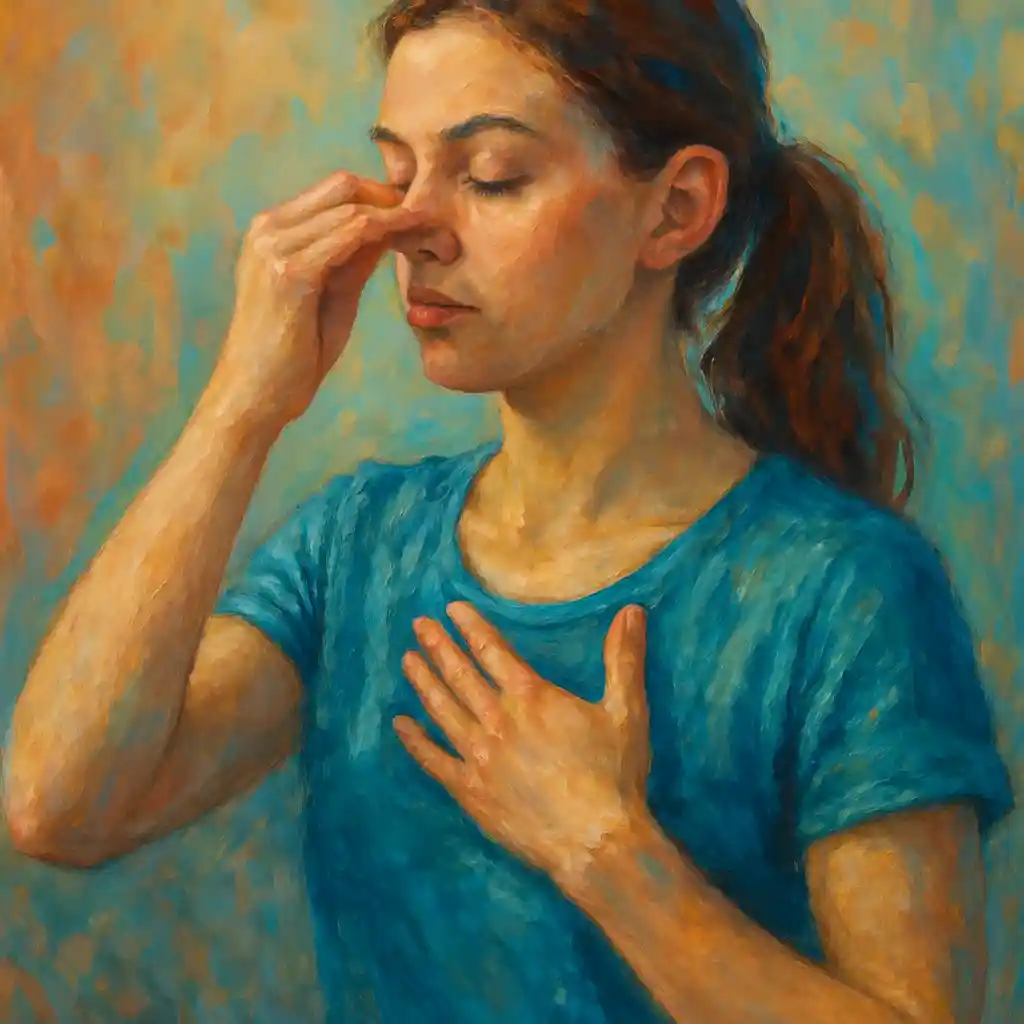
Stress-induced neck tension can show up at the worst times: while you sit at a desk, after a busy day, or even when you wake up and can barely turn your head. If you want a simple, natural tool you can use anywhere, 4 7 8 breathing is one of the easiest ways to calm your body and help your neck and shoulders relax. In this post, you’ll learn what stress-induced neck tension is, why it feels so strong in the neck, and how to use 4 7 8 breathing step by step to feel relief—especially if you’re a senior dealing with stiffness, stress, or ongoing discomfort.
When your breathing slows down, your nervous system can shift toward calm—and your neck muscles often follow.
Why Stress-Induced Neck Tension Happens (and Why It Feels So Common)
Stress-induced neck tension is not “all in your head.” Stress affects the whole body. When you feel worried, rushed, or overwhelmed, your body often tightens without you noticing. Many people lift their shoulders, clench their jaw, or hold their breath. Over time, this can leave the neck muscles tight, sore, and tired.
Common causes of neck tension in seniors
Seniors often deal with neck tension for more than one reason. Stress can be the trigger, but other factors can add to it.
- Poor posture (especially when sitting for long periods)
- Stress and anxiety that make muscles tighten
- Arthritis or age-related stiffness
- Muscle strain from daily activities (gardening, housework, carrying bags)
- Long screen time with the head tilted down
How stress affects the body, especially the neck
When stress rises, the body can enter a “fight-or-flight” state. In that state, muscles may tighten to prepare for action. The neck and shoulders are common places where the body stores this tension. You probably know the feeling: your shoulders creep up, your neck feels stiff, and even small movements become uncomfortable.
This can lead to:
- Headaches
- Reduced range of motion (turning the head feels harder)
- Difficulty sleeping comfortably
- More soreness after simple tasks
- Lower focus and more irritability
Why it’s important to address stress-induced neck tension early
It’s easy to ignore neck tension and hope it goes away. But stress-induced neck tension can build over time. When you respond early—before it becomes intense—you may prevent a cycle of pain, poor sleep, and even more stress.
Addressing it promptly can help:
- Prevent tension from turning into ongoing discomfort
- Support better posture and reduce strain
- Improve relaxation and sleep quality
- Help you feel calmer and more in control
What Is 4 7 8 Breathing and How Does It Help Stress-Induced Neck Tension?
4 7 8 breathing is a simple breathing pattern: inhale for 4 seconds, hold for 7 seconds, and exhale for 8 seconds. It is often linked to Dr. Andrew Weil and is inspired by older yogic breathing practices that focus on calming the mind and body through breath control.
Even though it’s simple, 4 7 8 breathing can feel powerful because it helps slow your breathing and invites your body to relax. When the body relaxes, tight muscles—especially in the neck and shoulders—may start to soften.
The basic 4 7 8 breathing pattern
- Inhale through your nose for 4 seconds
- Hold your breath for 7 seconds
- Exhale slowly through your mouth for 8 seconds
- Repeat for a few cycles
Benefits of 4 7 8 breathing for stress and tension
People often use 4 7 8 breathing to calm down quickly, especially during stressful moments. With regular practice, it can also support a more relaxed daily baseline.
Common benefits include:
- A calmer mind during stress
- Less “tight” feeling in the neck and shoulders
- Better ability to pause before reacting
- A relaxing routine for mornings or bedtime
Why it’s easy to add to your daily routine
You can practice 4 7 8 breathing sitting in a chair, lying in bed, or even taking a quiet moment in your car (parked safely). It does not require equipment, special clothing, or a lot of time. That makes it a practical tool for seniors and anyone who wants a gentle, natural way to manage stress-induced neck tension.
Step-by-Step: How to Do 4 7 8 Breathing for Stress-Induced Neck Tension
If you’re new to 4 7 8 breathing, start slowly. The goal is comfort, not pushing yourself. Done gently, this technique can help your body settle and your neck muscles relax.
1) Get into a comfortable position
Sit or lie down in a comfortable position. If you’re sitting, place your feet flat on the floor. Let your hands rest in your lap. If you’re lying down, support your head and neck in a neutral position.
2) Check your posture (small changes matter)
Good posture supports easier breathing and can reduce stress-induced neck tension. Try these simple adjustments:
- Let your shoulders drop away from your ears
- Keep your chin level (not lifted, not tucked too hard)
- Sit tall but relaxed—avoid a rigid “military” posture
Many people notice that when they sit up gently, breathing becomes smoother. When breathing becomes smoother, the neck often feels less strained.
3) Begin the 4 7 8 breathing cycle
- Inhale quietly through your nose for a count of 4.
- Hold your breath for a count of 7.
- Exhale slowly through your mouth for a count of 8.
As you exhale, imagine the tension leaving your neck and shoulders. You don’t need to force this image—just let it be a gentle focus.
4) Repeat for a few rounds
Repeat the cycle a few times. Many people start with 4 cycles and see how they feel. If you feel calm and comfortable, you can add more cycles slowly over time.
Beginner tips to build your breathing practice safely
- Start small: even 2–4 cycles can help.
- Keep it gentle: don’t strain during the breath hold.
- Focus on the exhale: a slow exhale often brings the most relaxation.
- Notice your neck: after each cycle, check if your shoulders have lifted and let them drop again.
The Science Idea Behind 4 7 8 Breathing and Stress-Induced Neck Tension
You don’t need to know a lot of biology to benefit from 4 7 8 breathing, but it helps to understand the basic idea: deep, controlled breathing can affect the nervous system. When stress is high, the body tends to stay alert. When breathing slows down and becomes steady, the body often shifts toward relaxation.
How deep breathing affects the nervous system
Slow breathing can signal safety to the body. This can reduce the “fight-or-flight” feeling and support the “rest-and-digest” state. When the body is calmer, muscles that were tight for protection—like the neck and shoulders—may begin to loosen.
Research support (general) for deep breathing and stress relief
Deep breathing is widely discussed as a stress relief tool. It is commonly linked with reduced stress feelings and better relaxation. Many people also report improved sleep and a calmer mood when they practice a steady breathing routine.
How 4 7 8 breathing targets neck tension and muscle relaxation
Stress-induced neck tension often comes with shallow breathing and tight shoulders. 4 7 8 breathing helps you slow down, breathe deeper, and release tension on the exhale. Over time, this can help you notice when you are tensing your neck—and give you a simple way to reset.
Real-Life Relief: Seniors Using 4 7 8 Breathing for Stress-Induced Neck Tension
Many seniors say they feel neck tension after desk work, daily chores, or stressful events. Some also notice stiffness from arthritis or long periods of sitting. While everyone’s body is different, many people find that 4 7 8 breathing helps them feel calmer and more comfortable.
Here are examples shared in the draft:
- Mary (68) noticed less chronic neck tension after adding 4 7 8 breathing to her daily routine.
- John (72) used 4 7 8 breathing before and after golf to help with neck stiffness.
- Susan (75) practiced 4 7 8 breathing alongside her routine and felt better able to manage neck discomfort related to arthritis.
These stories share the same theme: a few minutes of steady breathing can help you feel more in control when stress-induced neck tension starts to build.
Combine 4 7 8 Breathing with Gentle Stretches for Stress-Induced Neck Tension
4 7 8 breathing can be even more helpful when you pair it with gentle movement. The breathing calms the nervous system, and the stretches give your neck muscles a safe way to release tightness. Keep all movements slow and comfortable—no sharp pulling.
Simple neck stretches to try (senior-friendly)
Before you stretch, do 1–2 cycles of 4 7 8 breathing to help your body soften.
- Side tilt: Slowly tilt your head to one side (ear toward shoulder). Hold for 15–30 seconds. Breathe slowly. Switch sides.
- Gentle rotation: Slowly turn your head to look over one shoulder. Pause, breathe, then turn to the other side.
- Chin to chest: Gently bring your chin toward your chest to stretch the back of the neck. Hold for 15–30 seconds.
- Shoulder rolls: Roll shoulders back and down slowly to release upper back and neck tension.
Why breathing plus stretching can feel better
Stretching while stressed can feel harder because the body is still “guarding.” When you use 4 7 8 breathing first, your body may feel safer, and the neck can relax more easily. Many people also find that breathing helps them stretch more gently, without rushing.
Safety Tips for Seniors Practicing 4 7 8 Breathing
4 7 8 breathing is gentle, but it’s still important to practice safely—especially if you are older, have medical conditions, or are new to breath exercises.
Start slow and avoid dizziness
If you feel lightheaded, dizzy, or uncomfortable, stop and return to normal breathing. Next time, reduce the number of cycles or shorten the breath hold. Comfort is the goal.
When to avoid deep breathing exercises
There are times when it may be better to pause deep breathing techniques:
- If you are currently feeling dizzy or unwell
- If you tend to hyperventilate easily
- If a breathing technique increases discomfort instead of reducing it
Tips for seniors with medical conditions or mobility limits
If you have limited mobility, you can still practice 4 7 8 breathing in a supportive chair or in bed. Use pillows to support your head and neck. Keep your posture comfortable and your shoulders relaxed.
Consult your healthcare provider when needed
If you have respiratory conditions or other health concerns, it’s wise to consult a healthcare provider before starting a new breathing routine. This helps ensure you are practicing 4 7 8 breathing in the safest way for your body.
Create a Relaxing Space for 4 7 8 Breathing (So Stress-Induced Neck Tension Lets Go)
Your environment can support your results. A calm space makes it easier to focus on 4 7 8 breathing and easier to notice where you hold stress-induced neck tension.
Choose a quiet, comfortable spot
Pick a place where you feel safe and undisturbed. It could be a chair by a window, a corner of your bedroom, or a peaceful spot in the living room. Comfort matters more than perfection.
Use calming music or aromatherapy if it helps
Some seniors enjoy soft music or gentle aromatherapy (like lavender) to set the mood. If it helps you relax, it can support your breathing session and make it easier to release neck tension.
Add a touch of mindfulness
As you practice 4 7 8 breathing, gently bring your attention to your neck and shoulders. Notice if your shoulders are rising. Notice if your jaw is tight. Then, on each exhale, allow those areas to soften. This mindful check-in can be a powerful way to reduce stress-induced neck tension during the day.
Track Your Progress: Notice What Improves Stress-Induced Neck Tension
Small changes add up. Tracking your progress helps you see what works and what triggers your stress-induced neck tension.
Keep a simple breathing and neck tension journal
You can write down:
- When you practiced 4 7 8 breathing (morning, afternoon, bedtime)
- Your neck pain or tension level before and after (for example, 1–10)
- What was happening that day (stressful call, long drive, too much screen time)
Recognize patterns and triggers
Many people notice that stress-induced neck tension increases with certain habits: slouching, looking down at a phone, or rushing through tasks. When you see the pattern, you can respond faster—often with just a few cycles of 4 7 8 breathing.
Celebrate small wins
If you catch your shoulders tensing and you relax them, that is a win. If you practice 4 7 8 breathing before bed and sleep a little better, that is a win. These small milestones build confidence and consistency.
Make 4 7 8 Breathing a Daily Habit for Long-Term Neck Comfort
The best results often come from regular practice. Think of 4 7 8 breathing as a daily tool for stress management and neck care, not only an emergency fix.
Easy ways to practice throughout the day
- Do 2–4 cycles of 4 7 8 breathing when you wake up
- Take a short breathing break after sitting for a long time
- Use it after stressful moments (appointments, phone calls, busy errands)
- Practice before bedtime to help your body settle
Add it to morning and bedtime routines
Morning practice can help you start the day calmer. Bedtime practice can help you let go of stress-induced neck tension that built up during the day. Even a few minutes can make a difference when done consistently.
Consistency matters more than intensity
You don’t need to do long sessions. A short, gentle practice done often is usually more helpful than a long session done once in a while. If you miss a day, simply return to your routine the next day.
Conclusion: Breathe Your Way Out of Stress-Induced Neck Tension
Stress-induced neck tension can make daily life feel harder than it needs to be, especially when it affects sleep, movement, and mood. 4 7 8 breathing is a simple, natural technique you can use to calm your nervous system and invite your neck and shoulders to relax. Start with a few gentle cycles, practice consistently, and consider pairing it with light stretches for extra relief. If you’d like more simple self-care ideas like this, explore more posts in our wellness section and choose one small practice to try today.