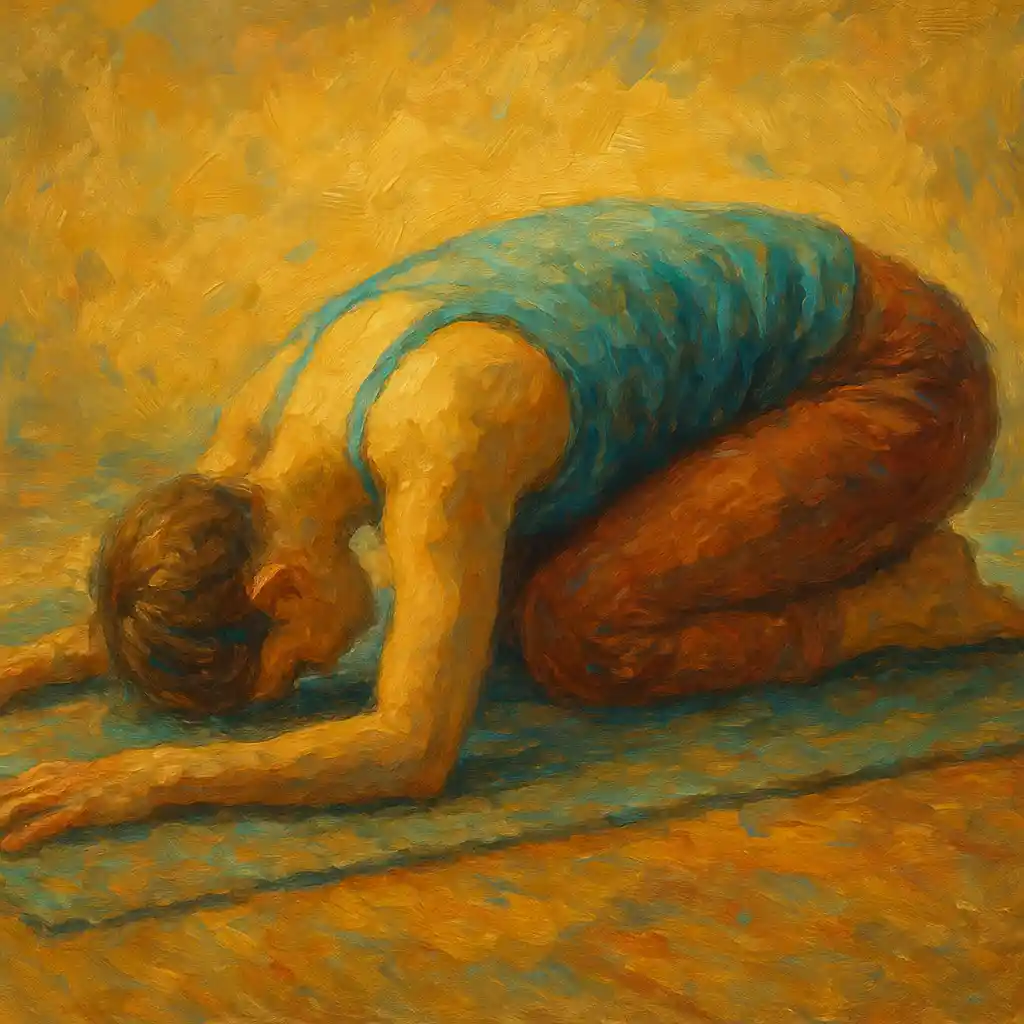
Waking up with a stiff, achy neck can make simple things—turning your head, driving, working at a computer, even sleeping—feel harder than they should. If that sounds familiar, Child’s Pose variations for chronic neck tightness can be a calm, gentle way to start easing tension in your neck and shoulders. Many people feel neck tightness from a mix of poor posture, stress, and muscle imbalance. The good news is that you don’t need an intense workout to begin feeling better. A few minutes of the right yoga position, done with care and steady breathing, can support both physical relief and mental relaxation.
Child’s Pose variations for chronic neck tightness work best when you go slowly, focus on comfort, and let your breath guide the stretch—not force.
In this guide, you’ll learn what chronic neck tightness is, why it happens, how Child’s Pose helps, and exactly how to do the basic pose plus several targeted variations. You’ll also get clear safety tips, simple modifications, ideas for building a daily routine, and complementary practices like neck strengthening and mindfulness.
Understanding Chronic Neck Tightness (and Why It Keeps Coming Back)
Chronic neck tightness is more than a short, one-day stiff neck. It is a pattern of tension, soreness, or limited movement that shows up often and may last for weeks or longer. It can feel like your neck is “stuck,” heavy, or constantly tense—especially after work, after stress, or first thing in the morning.
Common causes of chronic neck tightness
Chronic neck tightness usually has more than one cause. The most common ones include:
- Poor posture: Long hours hunched over a laptop or phone can pull the head forward and overload the neck muscles.
- Stress: When you feel stressed, many people unconsciously lift their shoulders and tighten their neck.
- Muscle imbalances: Some muscles become overworked and tight while others become weak, which can change how your neck and shoulders sit.
- Everyday habits: Sleeping positions, carrying bags on one side, or working without breaks can add to the problem.
Symptoms and daily-life impact
Chronic neck tightness can show up in different ways. You may notice:
- Persistent stiffness or a “tight band” feeling around the neck
- Limited range of motion (turning your head feels hard)
- Headaches that seem connected to neck tension
- Knots in the neck and shoulders
- Tingling or numbness in the arms (this can happen and should be taken seriously)
Over time, these symptoms can affect sleep, focus, mood, and the ability to do normal tasks comfortably. That’s why a gentle, repeatable tool like Child’s Pose variations for chronic neck tightness can be so helpful: you can do them at home, they don’t require special equipment, and they support relaxation while stretching key areas.
How Child’s Pose Variations for Chronic Neck Tightness Help
Child’s Pose is a restful yoga posture that gently lengthens the spine and encourages the shoulders to soften. When done with good alignment, it creates a safe place for your upper body to relax. Many people feel immediate relief because the pose invites the neck and shoulders to “let go” instead of staying braced.
Physical benefits for the neck and shoulders
In Child’s Pose, your body is supported close to the ground. This helps reduce effort in the neck. With your forehead resting down (on the mat or a prop), the muscles around the neck and upper back can start to relax. The pose can also stretch areas that often contribute to neck tightness, including the upper back, shoulders, and the muscles along the spine.
Mental benefits that support pain relief
Stress and neck tension often feed each other. Child’s Pose is known as a calming pose because it encourages slow breathing and a sense of safety. When your breathing slows, your nervous system can shift toward relaxation. That matters because a relaxed body is less likely to hold tension in the neck and shoulders.
With regular practice, Child’s Pose variations for chronic neck tightness can become a simple daily reset—especially after long screen time or stressful moments.
Basic Child’s Pose Technique (Start Here First)
Before trying variations, it helps to learn the traditional Child’s Pose with comfortable alignment. The goal is not to “reach far” or push into a deep stretch. The goal is to feel supported and calm.
Step-by-step: traditional Child’s Pose
- Start on your hands and knees on a mat or soft surface.
- Bring your big toes together. Let your knees be together or open them wider—choose what feels best.
- Shift your hips back toward your heels. If your hips don’t reach your heels, that’s okay.
- Walk your hands forward and let your chest move toward the floor.
- Rest your forehead down on the mat. If it doesn’t reach comfortably, use a cushion, folded towel, or yoga block.
- Breathe slowly for 5–10 breaths, feeling your upper back and shoulders soften.
Alignment and breathing tips (key for neck comfort)
- Support your head: If your forehead is not comfortably supported, your neck may strain. Use a prop.
- Soften your shoulders: Let the shoulder blades slide down your back instead of lifting toward your ears.
- Keep the neck neutral: Avoid turning your head sharply or forcing the chin down.
- Use deep, slow breaths: Inhale gently into the ribs and back body; exhale and allow more release.
Once the basic pose feels calm and stable, you can explore Child’s Pose variations for chronic neck tightness that target specific tight areas.
Child’s Pose Variations for Chronic Neck Tightness (Most Helpful Options)
These variations are designed to keep the calming feel of Child’s Pose while changing the angle of the shoulders, upper back, and neck. Move slowly and choose the version that feels best in your body today.
1) Gentle Neck Stretch Variation (small, safe changes)
This variation keeps the body in Child’s Pose while adding very gentle neck movement. It is not about stretching hard. It is about easing stiffness and noticing where you hold tension.
How to do it:
- Come into Child’s Pose with your forehead supported.
- Keep your shoulders relaxed and your breath steady.
- If it feels comfortable, slightly glide your chin in toward your throat (like making a double chin) to lengthen the back of the neck.
- Return to neutral.
Why it helps: Small, controlled movements can reduce the feeling of “stuckness” without pulling on sensitive tissues. This can be a gentle entry point for Child’s Pose variations for chronic neck tightness, especially if your neck feels easily irritated.
2) Thread the Needle Variation (targets shoulder and upper-back tension)
Thread the Needle adds a twist that can release tension through the shoulder blade area and upper back—places that often contribute to neck tightness.
How to do it:
- Start on hands and knees.
- Slide your right arm under your left arm, palm facing up.
- Lower your right shoulder and the side of your head toward the mat.
- Keep your hips stacked above your knees (or gently shift back if that feels better).
- Breathe slowly for a few breaths, then switch sides.
Modifications for different levels:
- If your neck feels strained, place a folded towel under your head for support.
- If the twist feels too strong, keep more weight in your supporting hand and reduce the depth.
- If your shoulder is sensitive, do fewer breaths and come out slowly.
This is one of the most effective Child’s Pose variations for chronic neck tightness when the tightness is linked to shoulder tension and “knots” near the shoulder blades.
3) Extended Child’s Pose with Side Stretch (for side neck and rib tightness)
If one side of your neck feels tighter—common after mouse use, phone use, or carrying a bag—side stretching can help.
How to do it:
- Come into an extended Child’s Pose with arms reaching forward.
- Walk both hands a few inches to the right while keeping hips back.
- Feel a stretch along the left side of your body (side ribs, shoulder, possibly up toward the neck).
- Breathe for a few slow breaths, then walk hands back to center.
- Repeat on the other side.
Impact on neck tightness: When the side body and shoulder loosen, the neck often feels less “pulled” and more free. This makes it a useful option within Child’s Pose variations for chronic neck tightness, especially when tightness feels one-sided.
4) Supported Child’s Pose (best if your neck is very sensitive)
Support can make the pose more restful and reduce strain. This is especially helpful if you feel your neck tighten when your head is not fully supported.
How to do it with props:
- Place a cushion, folded blanket, or yoga bolster between your thighs and chest.
- Rest your torso on the support.
- Rest your forehead on the cushion/blanket (or on a block placed on top).
- Let your arms relax—either forward or alongside your body.
Why it helps: Supported versions can make Child’s Pose variations for chronic neck tightness accessible even on days when you feel stiff, tired, or stressed.
Precautions and Safety Tips for Child’s Pose Variations for Chronic Neck Tightness
Child’s Pose is gentle, but your neck is sensitive and deserves careful attention. Safety matters more than depth.
Talk to a healthcare provider when needed
Before starting any new exercise routine, it’s smart to consult a healthcare provider—especially if you have a history of neck injury, chronic conditions, or symptoms that worry you. A professional can help you understand what is safe for your body and what to avoid.
Modifications for neck injuries or chronic conditions
If you have specific neck limitations (for example, arthritis or a herniated disc), consider these safer options:
- Use props under your forehead to avoid hanging the head or forcing the neck.
- Keep arms by your sides if reaching forward increases shoulder or neck tension.
- Shorten the hold time and build slowly.
- Stay in supported Child’s Pose until you feel confident.
Signs you should stop or adjust
During Child’s Pose variations for chronic neck tightness, watch for these signals:
- Sharp or intense pain in the neck, shoulders, or back
- Discomfort that increases instead of easing
- Numbness or tingling in arms, hands, or neck
- Dizziness or light-headedness
- Shortness of breath or feeling “stuck” in the pose
- Instability or feeling like you can’t support yourself safely
If any of these happen, come out of the pose slowly, rest, and consider choosing a more supported version next time.
Real-Life Examples and Success Stories (What Improvement Can Look Like)
Not everyone experiences neck relief in the same way, and progress is often gradual. Still, many people notice meaningful changes when they practice consistently.
Common “before and after” patterns
- Before: waking up with stiffness, needing time to “loosen up,” pain when turning the head while driving.
After: easier morning movement, smoother head turns, less fear of sudden stiffness. - Before: shoulders feel lifted and tight all day, headaches linked to tension.
After: shoulders rest lower, fewer tension spikes, calmer breathing during stress. - Before: feeling stuck at a desk, neck tightness after computer work.
After: using a short Child’s Pose break as a reset, less end-of-day tightness.
These outcomes often come from combining Child’s Pose variations for chronic neck tightness with better daily habits—like posture breaks, stress management, and gentle strengthening.
How to Add Child’s Pose Variations for Chronic Neck Tightness to Your Daily Routine
Consistency matters more than intensity. A short daily practice is often more helpful than a long session once in a while.
Tips for building a simple home practice
- Pick a time trigger: after waking up, after work, or before bed.
- Keep it easy to start: leave your mat or a folded blanket in a visible place.
- Use a “minimum plan”: even 1–2 minutes counts on busy days.
- Track comfort, not perfection: your goal is less tension, not a deeper pose.
Suggested frequency and duration
For many people, a helpful starting point is:
- Frequency: most days of the week (or daily if it feels good)
- Duration: 1–3 minutes total at first, building to 5–10 minutes
- Style: one basic Child’s Pose + 1–2 variations that feel best
If your neck is very tight, shorter sessions more often may feel better than long holds.
Complementary Practices for Neck Health (So Tightness Doesn’t Return)
Child’s Pose variations for chronic neck tightness can relieve tension, but long-term neck comfort often improves faster when you also support strength and stress reduction.
Neck strengthening exercises (simple prevention support)
Neck tightness is not always solved by stretching alone. If certain muscles are weak, other muscles may tighten to “help.” Gentle strengthening can support better balance.
General ideas to explore (with professional guidance if needed):
- Posture-focused work to reduce forward head position
- Upper back and shoulder stability to reduce neck overload
- Slow, controlled movements instead of fast or heavy exercises
If you’re unsure what is safe for you, a healthcare provider or qualified professional can help you choose appropriate exercises.
Mindfulness techniques for stress reduction
Because stress often shows up in the neck, calming practices can make your stretching work better. You can combine mindfulness with Child’s Pose by:
- Counting breaths (for example, 5 slow inhales and 5 slow exhales)
- Relaxing the jaw (jaw tension often connects to neck tension)
- Noticing shoulder position and letting shoulders drop on each exhale
This combination can turn Child’s Pose variations for chronic neck tightness into a full reset for both body and mind.
Tools and Props for More Comfort in Child’s Pose Variations for Chronic Neck Tightness
Props are not “cheating.” They are smart support—especially when the goal is neck relief, not intensity.
Recommended props
- Yoga block (or a thick book) to bring the floor closer to your forehead
- Folded blanket or towel for padding and head support
- Cushion or bolster to support your chest and reduce strain
How to use props effectively
- Support the forehead so your neck can relax fully.
- Support the chest if your shoulders feel compressed or your breathing feels limited.
- Adjust slowly: a small height change can make a big difference in neck comfort.
Many people find that once they use props, Child’s Pose variations for chronic neck tightness feel more soothing and easier to do consistently.
Common Misconceptions About Neck Pain and Yoga
When your neck hurts, it’s normal to feel unsure about stretching. Clearing up a few misunderstandings can help you practice safely.
Myth: “If it stretches more, it’s better”
Neck tissues can react badly to pushing. A gentle stretch with steady breathing is often more helpful than a deep stretch that creates strain.
Myth: “Yoga always fixes neck pain”
Yoga can be supportive, but neck pain can have many causes. Sometimes you need medical guidance, changes to your work setup, or specific strengthening. Think of Child’s Pose variations for chronic neck tightness as one helpful tool—not the only tool.
Beneficial stretching vs. harmful strain
Beneficial stretching usually feels like mild tension that eases with breathing. Harmful strain often feels sharp, intense, or “pinchy,” and may leave you feeling worse afterward. In neck-focused practice, it is always safer to do less and stay comfortable.
Expert-Style Guidance: Practical Tips for Different Needs
While this article is not a substitute for personal medical advice, these practical guidelines can help you practice in a safer way.
If reaching your arms forward increases neck tension
- Try arms alongside your body with palms facing up.
- Let your shoulders drop away from your ears.
- Use a prop under your forehead so you don’t “search” for the floor.
If you have limited mobility or feel compressed in the pose
- Widen the knees to create more space for the torso.
- Place a cushion between thighs and chest.
- Keep holds short and repeat more often.
If you feel tingling, numbness, or symptoms down the arm
Come out of the pose and consider speaking with a healthcare provider. These symptoms can be a sign that you need a different approach.
Long-Term Benefits of Consistent Practice
The biggest changes often come from doing small things regularly. Over time, Child’s Pose variations for chronic neck tightness may support:
- Better neck mobility (turning and looking around feels easier)
- Less daily stiffness, especially after sleep or desk work
- Improved comfort in shoulders and upper back
- More awareness of tension patterns, so you can relax sooner
Staying committed does not mean pushing hard. It means showing up gently, listening to your body, and choosing the version of the pose that feels supportive that day.
Conclusion
Chronic neck tightness can be frustrating, but relief can start with simple, gentle steps. By practicing Child’s Pose variations for chronic neck tightness with good support, calm breathing, and smart modifications, you can create a daily habit that helps your neck and shoulders feel lighter over time. Keep it comfortable, stay consistent, and pair your stretching with stress reduction and basic strengthening for the best long-term results.
If you’d like, explore our other beginner-friendly mobility and relaxation routines on the blog and build a short weekly plan you can actually stick to.