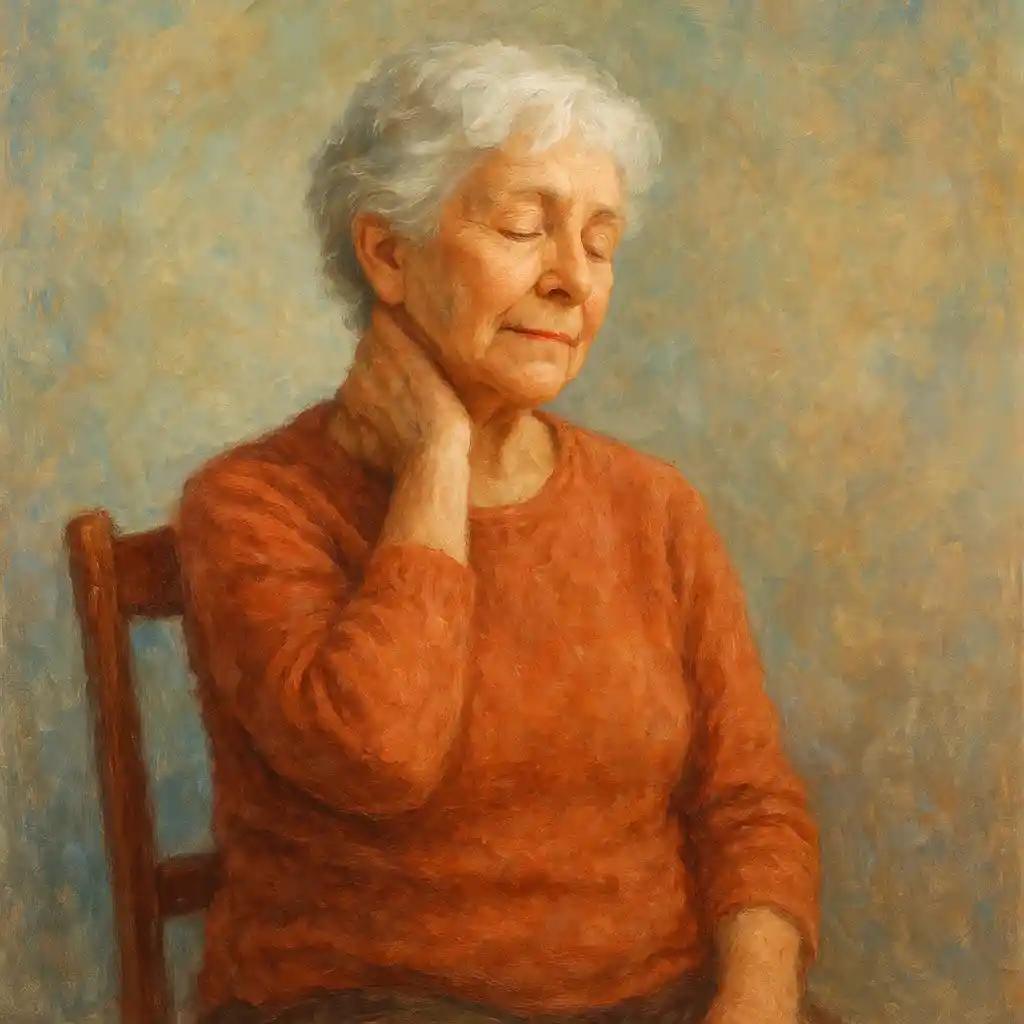
Neck pain can slowly change everyday life. It can make reading, watching TV, cooking, driving, and even sleeping less comfortable. For many older adults, neck discomfort is not just “part of aging.” Often, it is linked to posture habits that build up over time: looking down at screens, sitting with rounded shoulders, and staying in one position too long.
The good news is that small actions, repeated daily, can create real change. This article shares a clear, practical method for Better Neck Health in Seniors: the Posture Awareness Pause Daily Habit. This habit is gentle, low-risk, and easy to add to normal life. It does not require special equipment, a gym membership, or long workouts. It simply trains the body to return to a healthier position again and again, reducing stress on the neck.
Why posture matters for Better Neck Health in Seniors
The neck is not meant to carry heavy pressure for long periods. The head weighs about the same as a bowling ball. When the head sits directly over the shoulders, the neck muscles work in a balanced way. When the head moves forward (a common posture when reading or using a phone), the neck and upper back muscles must work much harder. Over time, this can lead to:
- tight neck and shoulder muscles
- stiffness and reduced range of motion
- headaches linked to muscle tension
- pain that spreads to the upper back, shoulder blades, or arms
- poor breathing patterns from a collapsed chest position
- lower energy because the body constantly fights gravity in an inefficient way
For seniors, posture issues can also affect balance and confidence while moving. Better posture can support safer walking and easier daily tasks.
Better Neck Health in Seniors often starts with one key skill: noticing posture early, then gently correcting it before pain builds.
The Posture Awareness Pause: a simple daily habit with big results
What it is
A Posture Awareness Pause is a short moment—usually 10 to 30 seconds—when a person stops and checks body position. The goal is not “perfect posture.” The goal is a calmer, more neutral posture that reduces strain on the neck.
It works because posture is mainly a habit. Habits improve through repetition, not through one big effort. A short pause repeated many times per day can reshape how the body holds itself.
What this habit improves
With steady practice, many seniors notice:
- less neck and shoulder tension
- fewer flare-ups of stiffness
- easier head turning when driving or walking
- improved comfort during sitting and screen time
- better awareness of slouching before it becomes painful
- more relaxed breathing and a lighter feeling in the upper body
This is exactly the kind of gentle, daily approach that supports Better Neck Health in Seniors over the long term.
The “neutral posture” you are aiming for
Neutral posture is a comfortable, balanced position. It should feel steady, not forced.
Use these simple checkpoints:
- Feet: flat on the floor when sitting; weight balanced when standing
- Hips: evenly placed on the chair (not leaning to one side)
- Ribs and chest: lifted softly, not over-arched
- Shoulders: relaxed and slightly back, not rounded forward
- Head: balanced over the shoulders, not reaching forward
- Chin: level or slightly tucked (as if making a gentle double-chin)
This posture reduces pressure on the neck joints and muscles.
Step-by-step: how to practice the Posture Awareness Pause
Step 1: Set reminders that fit real life
Reminders make the habit automatic. Use methods that match your routine:
- a phone alarm every hour
- a smartwatch vibration reminder
- sticky notes on the TV, computer, or fridge
- a reminder linked to daily actions (after bathroom breaks, after making tea, after finishing a phone call)
Keep reminders friendly and simple. The goal is progress, not pressure.
Step 2: Do the posture check (10 seconds)
Each pause follows the same quick pattern:
- Stop and place both feet stable.
- Relax the shoulders down, away from the ears.
- Lift the chest gently (no big arch).
- Bring the head back so ears line up over shoulders.
- Soften the jaw and face.
This can be done sitting or standing.
Step 3: Add one gentle movement (10–20 seconds)
Choose one small movement during the pause:
- shoulder rolls (slow)
- a gentle chin tuck
- a slow neck turn left and right (small range)
- a side bend stretch (ear toward shoulder, very gentle)
Small movements reduce stiffness and signal the body to release tension.
Step 4: Add calm breathing (2–4 slow breaths)
Breathing helps the neck because tension often rises with stress and shallow breaths.
- inhale through the nose
- exhale slowly
- feel the shoulders drop a little on each exhale
This combines posture and relaxation, a strong mix for Better Neck Health in Seniors.
Step 5: Return to the activity with better alignment
Continue what you were doing, but keep one posture cue in mind, such as:
- “shoulders soft”
- “head back”
- “chest open”
- “feet grounded”
Over time, the body learns the new default position.
Practical posture tips for daily life (simple, realistic, effective)
Sitting posture (TV, reading, computer)
Many seniors spend several hours per day sitting. Small fixes can reduce neck stress quickly.
- Sit with hips all the way back in the chair.
- Keep both feet supported (use a footstool if needed).
- Keep shoulders relaxed and chest gently lifted.
- Keep the screen or book closer to eye level to avoid looking down.
Helpful support:
- A small cushion or rolled towel behind the lower back can improve spine alignment.
- Armrests can reduce shoulder load if they fit your height.
Standing posture (kitchen, waiting in line, chores)
Standing with rounded shoulders and forward head position often increases neck tension.
- Keep weight even on both feet.
- Soften knees (not locked).
- Let arms hang naturally.
- Lift the chest gently and bring the head back over shoulders.
A simple cue that helps: imagine the top of the head rising upward while shoulders stay relaxed downward.
Walking posture
Walking is excellent for circulation and mobility. It also becomes a posture exercise.
- Look forward, not down.
- Keep shoulders relaxed.
- Let arms swing naturally.
- Keep steps steady and comfortable.
If balance is a concern, focus on posture first, speed second.
Driving posture
Driving can push the head forward. A few adjustments support Better Neck Health in Seniors.
- Move the seat closer so arms reach the wheel without leaning.
- Adjust the headrest so it supports the back of the head.
- Keep shoulders down and back.
- Take posture pauses at red lights: shoulders relax, chin level, gentle breath out.
Phone and tablet posture
This is one of the biggest modern causes of neck strain.
- Raise the phone higher.
- Bring the screen toward the face instead of bringing the face toward the screen.
- Rest elbows on pillows or armrests to support the arms.
Even a small increase in screen height can reduce neck load.
Ergonomic adjustments that support Better Neck Health in Seniors
Ergonomics means setting up the environment so the body does not fight it all day.
Screen height and distance
For computers:
- Top of the screen near eye level
- Screen about an arm’s length away
- Keyboard and mouse close enough to avoid reaching forward
For laptops:
- Use a laptop stand or stack of books
- Add a separate keyboard if possible
Chair setup
A supportive chair reduces strain.
Check these points:
- feet supported
- hips slightly higher than knees if comfortable
- lower back supported
- shoulders relaxed, not pushed forward by the chair arms
Pillow and sleep posture
Sleep position can either help or irritate the neck.
General guidelines:
- Back sleeping: use a pillow that supports the neck curve, not a tall pillow that pushes the head forward.
- Side sleeping: use a pillow thick enough to keep the head level (not tilted down or up).
- Stomach sleeping often twists the neck and is harder on the joints.
A supportive pillow is not about luxury. It is a basic tool for Better Neck Health in Seniors.
Safe neck stretches and exercises for seniors (gentle, effective, low equipment)
These movements should feel mild and controlled. Pain, dizziness, tingling, or sharp symptoms are signals to stop and seek professional guidance.
1) Chin tuck (posture reset)
Purpose: strengthens deep neck muscles and reduces forward head posture.
How:
- Sit or stand tall.
- Keep eyes level.
- Gently pull the head straight back (like making a soft double-chin).
- Hold 3–5 seconds, then relax.
Do: 5–10 repetitions, once or twice per day.
2) Shoulder rolls (tension release)
Purpose: reduces upper shoulder tightness that pulls on the neck.
How:
- Lift shoulders slightly up.
- Roll them back in a slow circle.
- Drop them down gently.
Do: 10 slow circles backward, then 10 forward.
3) Neck rotation (gentle turning)
Purpose: improves comfort when looking left and right.
How:
- Sit tall.
- Turn head slowly to the left (small range).
- Pause 2 seconds.
- Return to center.
- Turn to the right.
Do: 5 turns each side.
4) Side neck stretch (upper trap stretch)
Purpose: eases tension along the side of the neck.
How:
- Sit tall.
- Let the left ear move gently toward the left shoulder (do not lift the shoulder).
- Hold 10–20 seconds.
- Repeat on the other side.
Do: 1–2 times each side.
Optional: For a slightly deeper stretch, rest one hand lightly on the head. No pulling.
5) Shoulder blade squeeze (upper back strength)
Purpose: strengthens upper back to support better posture.
How:
- Sit or stand tall.
- Bring shoulder blades gently toward each other (as if holding a pencil between them).
- Keep shoulders down.
- Hold 3–5 seconds.
Do: 10 repetitions.
This is one of the best strength moves for Better Neck Health in Seniors because the neck often hurts more when the upper back is weak.
A simple daily mini-routine (3–5 minutes)
This is easy to repeat:
- Shoulder rolls x 10
- Chin tucks x 8
- Shoulder blade squeezes x 10
- Neck rotation x 5 each side
- Two slow breaths with relaxed shoulders
Short routines done consistently beat long routines done rarely.
Safety precautions for seniors
For seniors, safety is always more important than intensity. The Posture Awareness Pause is gentle, but these reminders help keep it safe:
- Consult a healthcare provider or physical therapist before starting a new routine, especially after surgery, falls, or when there is osteoporosis, nerve pain, or dizziness.
- Avoid fast, jerky neck movements.
- Keep stretches mild. Strong stretching is not necessary and can irritate joints.
- Stop if symptoms include sharp pain, dizziness, nausea, numbness, or tingling in the arms.
- Focus on posture and upper back strength, not forcing neck range of motion.
With smart pacing, this habit supports Better Neck Health in Seniors without adding risk.
Common challenges and how to overcome them
“I forget to do it.”
Use stronger triggers:
- every meal
- every bathroom visit
- every TV commercial break
- every time you pick up the phone
Forgetfulness is normal. The solution is a better reminder system, not more willpower.
“I do it for a few days and stop.”
Make the habit smaller:
- one posture pause in the morning
- one posture pause in the afternoon
- one posture pause in the evening
Then grow from there. A habit that feels easy is the habit that stays.
“It feels weird to sit up straight.”
That is common when the body is used to slouching. Keep posture corrections gentle and short. Over time, the new position feels normal.
“I have pain already, so I avoid movement.”
Total rest often increases stiffness. Gentle movement within comfort is usually more helpful than avoiding all motion. A healthcare professional can guide safe options.
Real-life progress: what improvement can look like
Many seniors report similar patterns when they practice posture awareness consistently:
Week 1–2:
- better awareness of slouching
- small reduction in shoulder tension
- feeling “lighter” after pauses
Week 3–6:
- fewer bad neck days
- improved comfort during reading and TV
- easier head turns when walking or driving
After 2–3 months:
- better posture becomes more automatic
- improved upper back strength
- fewer flare-ups and less dependence on constant rubbing or heat
The key is not perfection. The key is repetition. This is how small habits create Better Neck Health in Seniors.
Integrating posture awareness into hobbies and leisure
Hobbies should feel enjoyable, not painful. Posture awareness helps protect that enjoyment.
Reading
- Raise the book with a pillow or book stand.
- Take a posture pause every chapter or every 10–15 minutes.
Knitting, crafts, puzzles
- Sit back in the chair with back support.
- Keep shoulders relaxed.
- Lift the work closer to eye level when possible.
Gardening
- Avoid long bending with a rounded back.
- Use kneeling pads or raised planters.
- Take posture pauses between tasks: stand tall, shoulders down, two breaths.
Social outings
- When sitting at cafés or events, place both feet on the floor and relax shoulders.
- When using a phone for photos or messages, raise it higher to protect the neck.
Small changes protect the neck without taking away joy.
The long-term value of posture awareness
Posture is not only about looking upright. It is about joint health, muscle balance, breathing, comfort, and independence.
Over time, better posture can support:
- reduced risk of chronic neck pain
- easier daily movement and stronger upper back
- improved confidence with walking and balance
- better sleep comfort
- fewer headaches linked to tension
- higher overall comfort during sitting tasks
This is why posture awareness is a strong foundation for Better Neck Health in Seniors. It helps the body work with less strain every day.
A simple plan to start today (no stress, just steady progress)
Here is a practical starter plan that is easy to follow:
For the next 7 days:
- Do 3 Posture Awareness Pauses per day
- one in the morning
- one in the afternoon
- one in the evening
- During each pause:
- shoulders relax down
- chest lifts gently
- head returns over shoulders
- two slow breaths
- Add 5 chin tucks once per day
After one week, increase to 5–8 pauses per day if comfortable.
This approach is realistic, friendly to the body, and strong enough to create change.
Conclusion: small daily pauses, big support for Better Neck Health in Seniors
Neck pain does not need a complicated solution to start improving. A simple, repeated habit can reduce strain and build comfort. The Posture Awareness Pause Daily Habit supports the neck by improving alignment, relaxing tension, and strengthening the body’s natural posture system—little by little, day by day.
With gentle posture checks, calm breathing, safe stretches, and small ergonomic improvements, seniors can protect their neck and improve daily comfort. Over time, these small actions become a natural part of life, supporting movement, independence, and well-being.
Better Neck Health in Seniors is often built through consistent basics. The Posture Awareness Pause is one of the most effective basics available, because it is simple enough to do, and powerful enough to matter.