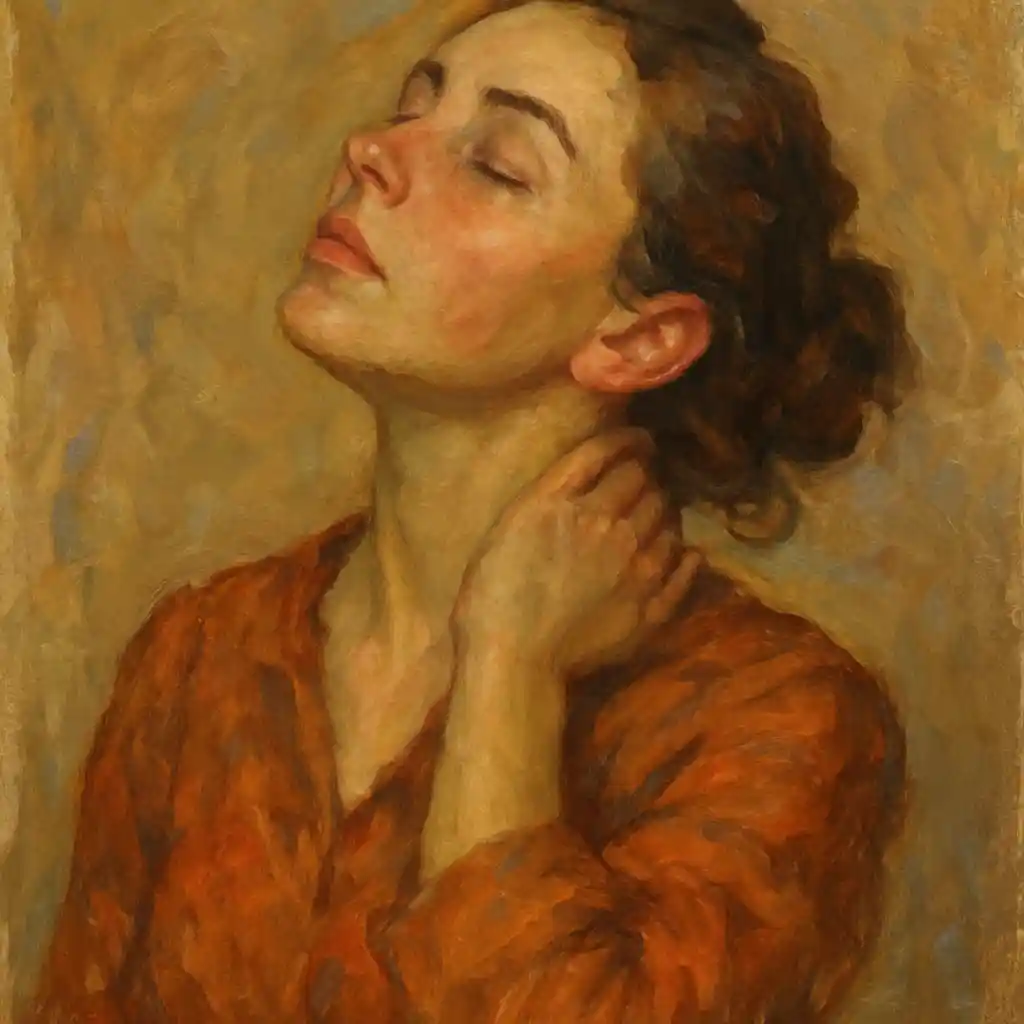
If you are looking for Alexander Technique neck tension relief, you are in the right place. Many seniors live with a tight, stiff neck that makes simple things harder—turning your head, reading, driving, or even enjoying a calm conversation. The Alexander Technique offers a gentle, mindful way to notice and release subtle tension patterns that build up over time. With small daily practice, you can improve comfort, posture, and ease of movement without forcing stretches or “pushing through” pain.
Small, calm changes in how you sit, stand, and move can create real daily neck freedom—especially when you stop adding extra tension you do not need.
Take a moment right now: notice your shoulders and neck. Are you tightening your jaw? Are your shoulders creeping up? Without “doing” anything big, let your breath soften and allow your shoulders to drop a little. This is the kind of subtle shift that supports Alexander Technique neck tension relief over time.
Why Neck Tension Happens (Especially for Seniors)
Neck tension is common, and it often builds slowly. Many people do not notice how much they tighten their neck until it becomes painful or limiting. Understanding what may be feeding your tension helps you choose safer, kinder steps toward Alexander Technique neck tension relief.
Common causes of neck tension in seniors
Neck tension can come from several sources, and more than one may be true for you:
- Poor posture while sitting or standing for long periods (for example, slouching or craning the head forward).
- Muscle strain from repetitive movements or overexertion.
- Arthritis or degenerative changes in the cervical spine.
- Stress and worry that lead to tightness in the neck, jaw, and shoulders.
It is also common to develop habits such as looking down at a phone, leaning forward to read, or tensing the shoulders while walking. These patterns can become “normal” even when they are uncomfortable.
How neck tension affects daily life and well-being
Neck tension is not only a neck problem. It can affect your whole day. A stiff neck may lead to headaches, reduced balance, reduced confidence when moving, and less enjoyment in simple activities. When your neck feels tight, you may also breathe more shallowly, which can increase feelings of stress.
Many seniors describe a cycle: discomfort leads to guarding and bracing, and bracing creates even more discomfort. Alexander Technique neck tension relief aims to interrupt that cycle by changing the way you use your body—gently and step by step.
What the Alexander Technique Is (and Why It Helps Neck Tension)
The Alexander Technique is a practical method that focuses on awareness, posture, and movement habits. It was developed by F.M. Alexander in the late 19th century. Instead of “fixing” the neck with force, it helps you notice how you may be tightening your neck and shoulders in daily life—and how to stop adding that extra tension.
Brief history and core principles
F.M. Alexander developed this approach after noticing that his own habits were contributing to his problems. Over time, the work became a method for improving coordination and reducing unnecessary tension.
Key ideas that support Alexander Technique neck tension relief include:
- Awareness: noticing what you are doing with your head, neck, shoulders, and back.
- Inhibition: pausing before you react with a tense habit (like tightening the neck when you stand up).
- Direction: choosing a calmer, freer way to organize yourself (often described as allowing the neck to be free and the head to balance easily).
Why it can be especially helpful for seniors
Seniors often want a method that is gentle, safe, and realistic. The Alexander Technique is not about heavy workouts. It is about learning to move with less effort and less strain. That is why many people find Alexander Technique neck tension relief helpful for daily comfort, balance, and confidence.
Alexander Technique Neck Tension Relief: What “Daily Neck Freedom” Really Means
Daily neck freedom does not mean your neck will feel perfect every day. It means you build a skill: you learn to notice tension earlier, release it more often, and move with more ease. Over time, many people report:
- Improved posture and alignment (without stiff “military posture”).
- Better mobility in the neck and upper back.
- Less chronic discomfort and fewer flare-ups.
- More energy, because you waste less effort bracing and tightening.
Daily neck freedom is often about doing less—less tightening, less bracing, less forcing—so your body can organize itself more naturally.
Improved posture and alignment
When the head balances more easily on top of the spine, the neck muscles do not have to work as hard. Many seniors are surprised to learn how much they “hold” their head forward or down. With Alexander Technique neck tension relief, posture improves through awareness and gentle direction, not through rigid holding.
Enhanced mobility and flexibility in the neck
Neck mobility often improves when you stop tightening against movement. This can support everyday tasks like checking traffic, reversing the car, looking at a shelf, or turning to speak to someone.
Reduction of chronic neck pain and discomfort
Many people live with ongoing neck discomfort that comes and goes. The Alexander Technique approach is to reduce the extra tension that may be adding to the problem. This does not replace medical care, but it can be a helpful part of your self-care plan for Alexander Technique neck tension relief.
Getting Started with Alexander Technique Neck Tension Relief
Starting is simple, but it works best when you keep it gentle and consistent. You can begin at home, and you can also work with a teacher for more personal guidance.
Find a certified Alexander Technique teacher
A certified teacher can help you notice habits you may not feel on your own—like subtly pulling the head back, tightening the jaw, or lifting the shoulders. If you want faster progress with Alexander Technique neck tension relief, personal instruction can be very valuable.
When you look for a teacher, choose someone who:
- Has clear training and certification.
- Explains things in a calm, simple way.
- Encourages comfort and safety (no forcing or painful movements).
Set up a quiet, comfortable practice space at home
Your practice space does not need to be large. A calm corner is enough. Aim for:
- A supportive chair where your feet can rest on the floor.
- Soft lighting and minimal distractions.
- A few minutes of privacy so you can pay attention to your body.
Consistency matters more than intensity. Five minutes daily can support Alexander Technique neck tension relief better than one long session once in a while.
Basic Alexander Directions for Neck Tension Relief (Simple and Gentle)
In Alexander Technique language, “directions” are gentle mental cues. They are not forceful commands. They help your body organize with less tension.
Mind-body connection and mindfulness
Mindfulness is a practical tool here. When you notice tension as it starts, you have more choice. Instead of waiting until the neck is already sore, you can pause and soften early.
Try this mindful check-in once or twice a day:
- Notice where your head is in space—are you pushing it forward?
- Notice your shoulders—are they lifted?
- Notice your jaw—are you clenching?
- Notice your breath—can it be a little easier?
This kind of awareness is a foundation for Alexander Technique neck tension relief.
Releasing tension with conscious movement and breath
Breathing can support release, but the goal is not “big breathing.” The goal is easy breathing. When you stop tightening the neck, the breath often becomes calmer by itself.
A gentle approach:
- Pause before you move.
- Let your shoulders soften.
- Allow the neck to be free (without forcing it to relax).
- Move slowly and notice if you tighten—then do less.
Gentle Neck Exercises for Subtle Tension Release
The movements below are meant to be comfortable and small. If anything causes pain, stop and choose a smaller range or skip it. These are not “workout” moves. They are awareness moves that support Alexander Technique neck tension relief.
1) Neck stretches and rotations (small and slow)
Sit or stand comfortably. Let your arms rest.
- Side tilt (small): Slowly tilt your head a little to the right, then back to center. Then a little to the left. Keep the movement easy.
- Gentle turn: Slowly turn your head a small amount to the right, then back to center. Then to the left. Avoid pushing into stiffness.
As you move, watch for extra effort: lifting the shoulders, holding the breath, tightening the jaw. Reducing those habits is part of Alexander Technique neck tension relief.
2) Shoulder rolls and easy head movements
Shoulder tension and neck tension often come together.
- Shoulder roll (slow): Roll your shoulders back and down in a comfortable circle. Do 3–5 times.
- Shoulder softening: Pause and simply allow the shoulders to rest without pulling them “back.”
Then notice: does your neck feel a little less busy?
3) Mindful breathing to release neck tension
Find a comfortable position. Let your hands rest in your lap.
- Take a few calm breaths.
- As you breathe in, think “space.”
- As you breathe out, think “soften.”
- If you notice tight spots in the neck, do not fight them—just include them in your awareness.
Practicing this daily supports Alexander Technique neck tension relief because it reduces the stress response that often tightens the neck.
How to Incorporate Alexander Technique Neck Tension Relief Into Your Daily Routine
The most effective practice is the one you actually do. Try to connect your neck freedom habits to activities you already do every day.
Set aside a dedicated time (short is fine)
Choose a time you can repeat—morning, mid-day, or bedtime. Even 5–10 minutes can help. If you prefer structure, keep it simple:
- 1 minute: posture check-in (jaw, shoulders, breath).
- 2 minutes: gentle head turns and side tilts.
- 2 minutes: shoulder rolls and softening.
- 1–5 minutes: mindful breathing and quiet sitting.
This routine supports Alexander Technique neck tension relief without becoming overwhelming.
Add neck release to morning and bedtime habits
Morning is helpful because it sets your tone for the day. Bedtime is helpful because it reduces the tension you carry into sleep.
Ideas:
- Morning: after you get out of bed, pause and let your head balance easily before you start walking around.
- Bedtime: do a short breathing practice and shoulder softening before you lie down.
Use “micro-pauses” during the day
Micro-pauses are 10–20 second check-ins. They are powerful because they prevent tension from building for hours.
Try micro-pauses:
- Before you stand up from a chair.
- Before you pick up a bag or laundry basket.
- Before you look down to read or use your phone.
- While waiting in line.
Each pause is a chance to practice Alexander Technique neck tension relief in real life.
Real-Life Examples: Seniors Practicing Daily Neck Freedom
Many seniors describe the Alexander Technique as “small changes that add up.” While each person is different, the theme is often the same: less bracing, easier movement, and more confidence.
Examples of daily improvements
- A senior who used to feel chronic stiffness notices they can turn their head more easily while walking.
- Someone who felt tension during morning routines finds more comfort by pausing and softening the shoulders before moving.
- A person who enjoys gentle exercise (like yoga or walking) finds they can move with more ease by reducing neck and jaw tension.
These kinds of changes are exactly what Alexander Technique neck tension relief is designed to support: better use of the body during normal life.
Safety Tips for Seniors Practicing Alexander Technique Neck Tension Relief
Gentle does not mean careless. Safety is part of good practice, especially if you have chronic pain, arthritis, or balance concerns.
Consult your healthcare provider when needed
Before starting a new exercise routine, it is wise to consult with a healthcare provider—especially if you have a medical condition, recent injury, dizziness, or severe pain. They can help you understand what is safe for you.
Listen to your body and avoid painful movements
Discomfort is a signal. Pain is a clear stop sign. If a movement causes pain:
- Stop and return to neutral.
- Try a smaller range of motion, or skip the movement.
- Focus on breath and shoulder softening instead.
In this work, “less” is often more. If you do less effort, you often get more comfort.
Overcoming Common Challenges (and Staying Consistent)
It is normal to face challenges when you start. The goal is not perfection. The goal is steady learning.
Resistance to change and old habits
Habits can feel “right” even when they cause tension. If you notice yourself going back to old patterns, that is not failure—it is information. The practice is simply to notice and choose again. This is a key part of Alexander Technique neck tension relief.
Helpful approach:
- Choose one habit to notice (like lifted shoulders).
- Notice it once or twice a day.
- Soften it gently, without forcing.
Finding motivation for daily practice
Motivation is easier when your plan is realistic. Rather than promising a long routine, choose a small commitment you can keep.
- Practice for 5 minutes daily instead of 30 minutes once a week.
- Attach practice to something you already do (after breakfast, before bed).
- Consider a few sessions with a teacher for guidance and encouragement.
Consistency is what builds lasting Alexander Technique neck tension relief.
Tools and Resources to Support Your Practice
You do not need special equipment, but a few supports can make practice easier and more comfortable.
Books and online learning
If you like to learn at home, these resources are often recommended in Alexander Technique circles:
- The Alexander Technique Manual by Richard Brennan
- Body Learning: An Introduction to the Alexander Technique by Michael Gelb
These can help you understand the ideas behind Alexander Technique neck tension relief and remind you of simple ways to practice.
Optional props to enhance comfort
Some people enjoy using gentle supports. Always be cautious and consult a professional if you are unsure.
- Supportive neck pillow or cushion for comfortable sitting and rest.
- Foam roller to gently release upper back tension (used carefully and slowly).
- Neck hammock or traction device only with caution and professional guidance, especially if you have spine issues.
Remember: props are optional. The core of Alexander Technique neck tension relief is awareness and reduced effort.
Tracking Progress and Adjusting Your Alexander Technique Neck Tension Relief Practice
Progress is often gradual. Tracking small changes can help you stay encouraged and notice what works.
Keep a simple journal
Once a day or a few times a week, write short notes:
- How tense did your neck feel today (low/medium/high)?
- What activities increased tension (reading, phone use, cooking)?
- What helped (micro-pauses, breathing, shoulder softening)?
This helps you see patterns and supports steady Alexander Technique neck tension relief.
Get feedback from an instructor
If you work with a teacher, feedback can help you refine your practice. A teacher can often spot subtle habits you cannot easily feel—like holding the breath or compressing the neck when you stand.
Even occasional sessions can support continuous growth.
Cultivating Mindfulness and Body Awareness for Long-Term Neck Freedom
Mindfulness is not only for relaxation. It is a practical skill that helps you notice tension early and release it before it becomes pain.
The role of mindfulness in relaxation
When you slow down and pay attention, your nervous system often settles. That can reduce the stress-based tightening that many people hold in the neck and shoulders. A few minutes of calm attention can support Alexander Technique neck tension relief more than forceful stretching.
Developing a deeper connection with your body
Over time, daily practice can help you feel more “at home” in your body. Many seniors describe feeling lighter, more balanced, and more confident in movement. This is not about doing everything perfectly. It is about learning what helps your body feel safer and easier.
Long-Term Benefits of Consistent Practice
When you practice consistently, you are not only chasing short-term relief. You are building habits that can protect you in the future.
Prevention of future neck pain and strain
By improving posture awareness, taking breaks, and reducing unnecessary tension, you may reduce flare-ups and avoid strain. Simple daily choices—like not craning the head forward—can support long-term Alexander Technique neck tension relief.
Improved overall well-being and quality of life
Many seniors find that when neck tension reduces, other things improve too: mood, energy, sleep quality, and enjoyment of daily activities. When you move with less effort, life often feels more manageable.
Conclusion: A Gentle Path to Daily Neck Freedom
Alexander Technique neck tension relief is not about forcing your neck to relax. It is about learning to notice what you are doing, releasing what you do not need, and moving with more ease. With a few minutes of daily practice—plus patience and kindness toward yourself—you can build more comfort, mobility, and confidence over time.
If you would like more support, explore other posts in our series and consider booking a session through our site to learn these skills with clear guidance and a simple plan you can follow at home.