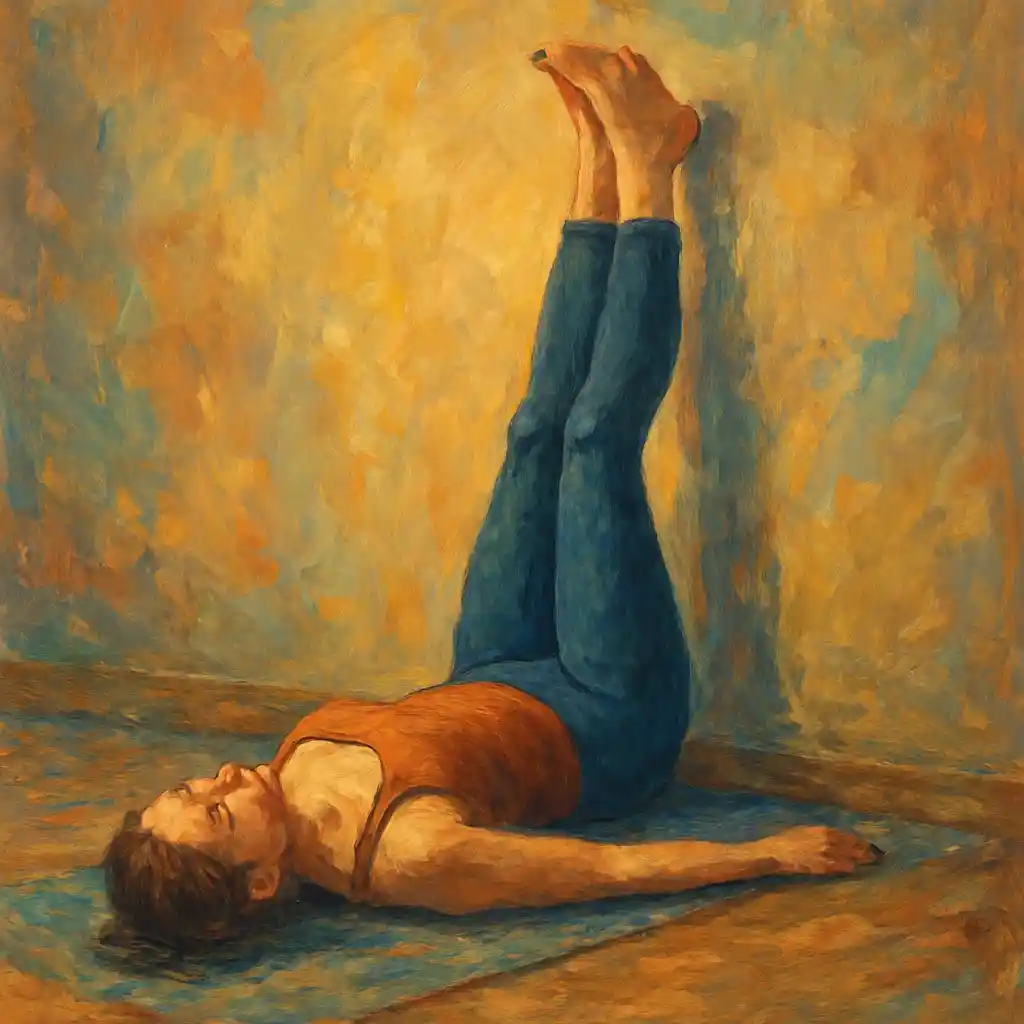
Waking up with a stiff, sore neck can make the whole day feel harder. Many seniors know this problem well: you sleep, but you do not feel rested, and your first head turn in the morning brings discomfort. The Daily Up-Legs Wall technique for neck pain relief is a simple, gentle practice you can do at home to help your body relax, ease tension in the neck and shoulders, and support better sleep.
The goal is not to “push” a stretch. The goal is to let your body settle, breathe, and allow tension to drain away—especially the tension that builds up overnight.
This post explains why neck pain is common in seniors, how sleep posture can make it worse, and how to do the Daily Up-Legs Wall technique safely and comfortably. You will also find helpful tips, modifications, and ways to make this practice easy to keep doing.
Why Neck Pain Is Common in Seniors
Neck pain can happen at any age, but many seniors feel it more often. Over time, the neck and shoulders can become more sensitive to stress, posture habits, and daily strain. When neck pain is present, it can affect mood, movement, and sleep quality.
Common causes of neck pain in seniors
Neck pain in seniors often has more than one cause. Some common reasons include:
- Poor posture (for example, a forward head position or slouching)
- Arthritis and age-related changes in joints
- Muscle strain from daily activities, lifting, or long periods in one position
- Stress and tension that shows up in the shoulders and neck
These issues can build up slowly, and then you notice them most when you wake up or when you try to relax at night.
How poor sleep posture can affect neck health
Sleep should help your body recover. But if your neck is not supported well, or if you stay in a tense position for hours, you may wake up feeling worse. Poor sleep posture can lead to:
- Extra pressure on the neck muscles and joints
- Tight shoulders and upper back
- Headaches linked to muscle tension
- More tossing and turning, which reduces sleep quality
This is one reason the Daily Up-Legs Wall technique for neck pain relief can be helpful. It gives your body a calm, supported position where you can release tension before bed or after waking.
Why addressing neck pain supports overall well-being
Neck pain is not only a “neck problem.” It can affect your whole day. When the neck feels tight, people often move less, breathe more shallowly, and feel more stressed. By reducing tension, you may notice benefits like:
- Better sleep comfort
- Less daily stiffness
- More relaxed shoulders
- Improved posture awareness
- More confidence with movement
What Is the Daily Up-Legs Wall Technique for Neck Pain Relief?
The Daily Up-Legs Wall technique is a gentle position where you lie on your back and rest your legs up against a wall. It is simple, low-cost, and easy to do at home. Many people use it to relax, unwind, and reduce tension after a long day.
For seniors with neck pain, the main idea is not that the wall “fixes” the neck directly, but that this calm position can help the whole body soften—especially the shoulders, upper back, and neck area.
How the technique works (simple explanation)
When you lie down and place your legs up the wall, you create a quiet, supported posture. In this position, you can:
- Let your shoulders drop and relax
- Reduce the urge to hold tension in your neck
- Slow your breathing and calm your nervous system
- Give your body a few minutes of stillness (which many people do not get during the day)
The practice is gentle. You should feel supported, not strained.
Key benefits for seniors with neck pain
When done consistently, the Daily Up-Legs Wall technique for neck pain relief can support:
- Reduced neck and shoulder tension through relaxation
- Improved circulation and a calmer body feeling
- Better sleep readiness when done before bedtime
- Less morning stiffness when done after waking
- Improved posture awareness because you learn what “relaxed alignment” feels like
How it helps “drain” overnight tension
Many seniors notice that tension builds while they sleep—especially if they clench the jaw, raise the shoulders, or sleep in an awkward position. The Daily Up-Legs Wall technique gives you a reset. You lie down, breathe, and allow tight areas to soften instead of staying “on duty.”
Think of this practice as a daily reset button. A few minutes of calm can reduce the tension your neck carries into the morning.
Daily Up-Legs Wall Technique for Neck Pain Relief: Setting Up for Success
A good setup makes a big difference. If you are uncomfortable, you will not want to continue. The goal is to make this practice feel safe, simple, and pleasant.
Choose the right wall space
Pick a quiet, clear wall where you can lie down without distractions. A few tips:
- Make sure the wall area is free of sharp objects or clutter.
- Choose a space where you can get down to the floor and back up safely.
- Use a yoga mat, rug, or folded blanket for comfort.
Use props for comfort (pillows, cushions, or yoga blocks)
Props can help seniors feel supported, especially if the floor feels too hard or if the hips and lower back feel tight.
- Under the head: If your neck feels strained when lying flat, use a thin pillow or folded towel. Keep it low so your chin does not push toward your chest.
- Under the hips: Some people like a small cushion under the hips for comfort. Keep it gentle—too high can create strain.
- Under the knees: If the back of the legs feels tight, you can move farther from the wall (more on this below).
Create a safe, calm environment
Small details can help you relax more fully:
- Wear comfortable clothing that does not restrict breathing.
- Keep the room warm enough so your muscles do not tighten.
- Turn off bright screens or loud distractions when possible.
How to Do the Daily Up-Legs Wall Technique for Neck Pain Relief (Step-by-Step)
This step-by-step approach keeps the technique simple and safe. Move slowly and gently. If anything feels sharp or wrong, stop and adjust.
Step 1: Prepare your space
Place a mat or blanket on the floor near the wall. Have a pillow or folded towel nearby in case your head or neck needs support.
Step 2: Sit close to the wall
Sit sideways with one hip near the wall. This makes it easier to swing your legs up without strain.
Step 3: Lower down and bring your legs up
Slowly lower your back to the floor and swing your legs up so your heels rest on the wall. Your legs do not need to be perfectly straight.
Important comfort tip: Your hips do not have to touch the wall. If you feel pulling in the back of the legs or discomfort in the lower back, move your hips a little farther away from the wall.
Step 4: Relax your arms and shoulders
Let your arms rest by your sides, palms facing up or down—whatever feels better. Soften your shoulders. Let them drop away from your ears.
Step 5: Breathe slowly and release neck tension
Close your eyes if you feel safe doing so. Take slow, deep breaths. With each exhale, imagine your neck and shoulders becoming heavier and more relaxed.
Step 6: Stay for 5–10 minutes (or up to 10–15 minutes if comfortable)
Many seniors do well with 5–10 minutes at first. Over time, you can work toward 10–15 minutes if it feels good and relaxing.
Step 7: Come out slowly
Bend your knees and roll gently to one side. Rest for a moment before sitting up. Move slowly to avoid dizziness.
Daily Up-Legs Wall Technique for Neck Pain Relief: Duration and Frequency
Consistency matters more than doing it “perfectly.” A short daily practice is often easier to keep than a longer practice you skip.
- Suggested duration: 10–15 minutes (or start with 5–10 minutes)
- Suggested frequency: Daily, or as often as you can
- Best times to practice: Before bed to unwind, or in the morning to reduce stiffness
If you are trying the Daily Up-Legs Wall technique for neck pain relief for the first time, start small. Even a few minutes can help you learn how your body responds.
Make It Work Better: Simple Tips to Enhance Results
The technique is already helpful on its own, but a few small additions can make it even more effective—especially for seniors who carry stress in the neck and shoulders.
Use deep breathing while you hold the position
Deep breathing helps relax muscles and reduce stress. Try this simple pattern:
- Breathe in slowly through your nose.
- Pause for a moment (only if comfortable).
- Breathe out slowly and fully.
Each exhale is a chance to soften your shoulders and relax your jaw.
Add gentle neck movements (only if it feels good)
Sometimes it helps to add very small movements. Keep them slow and easy:
- Small “yes” nods (tiny up-and-down movement)
- Small “no” turns (tiny side-to-side movement)
If any movement increases pain, stop and return to stillness.
Try calming music or guided meditation
Many people hold tension because their mind is busy. Calming music or a short guided meditation can make it easier to relax the neck area during the practice. If you notice your shoulders creeping up, gently let them drop again.
Real-Life Example: A Common Morning Neck Pain Story
Sarah, a 65-year-old retiree, wakes up most mornings with neck pain. The discomfort feels like tension built up overnight, and it makes her mornings slow and frustrating. After she started using the Daily Up-Legs Wall technique for neck pain relief for a few minutes before bed, she noticed she felt more relaxed at night and less stiff in the morning.
This kind of story is common: the practice is simple, but it helps because it creates a daily moment of release and calm—exactly what many seniors need.
Daily Up-Legs Wall Technique for Neck Pain Relief: Safety Precautions
This is a gentle technique, but safety always comes first—especially for seniors or anyone with ongoing pain.
Talk with a healthcare provider first
Before starting a new practice, it is smart to consult a healthcare provider—especially if you have chronic neck pain, mobility limitations, or other health concerns. They can help you decide what is safe for your body.
Adjust intensity based on comfort
You should not feel sharp pain, numbness, or strong pressure. Adjust by:
- Moving your hips farther from the wall
- Adding a thin pillow under the head
- Reducing the time you hold the position
Know when to stop
Stop the practice and reassess if you notice:
- Sharp or shooting pain in the neck
- Dizziness that does not pass quickly
- Numbness, tingling, or unusual weakness
- Soreness that persists and does not improve with rest
Listening to your body is part of good self-care.
Common Concerns (and Simple Solutions)
“I feel discomfort at first. Is that normal?”
A small amount of tightness or stiffness can happen at first, especially if you are not used to lying on the floor or holding still. But discomfort should not become pain. Use props, shorten the time, and adjust your distance from the wall.
“What if I have mobility issues?”
You can still try the Daily Up-Legs Wall technique for neck pain relief, but you may need to adapt it. Consider:
- Using extra cushions to make getting down and up easier
- Moving slowly and using a stable chair nearby for support
- Doing a shorter version (even 2–5 minutes)
The best version is the one you can do safely and comfortably.
“How do I stay consistent?”
Consistency is often a mental challenge, not a physical one. Try these simple ideas:
- Attach the practice to a habit you already do (like brushing your teeth or changing into pajamas).
- Set a small goal (5 minutes daily) instead of a big goal you avoid.
- Track how your neck feels in the morning so you can notice progress.
How to Add the Daily Up-Legs Wall Technique for Neck Pain Relief to Your Daily Routine
The easiest way to keep this practice is to make it part of your normal day. It should feel like a supportive routine, not another task.
Create a simple morning or evening ritual
Two popular options:
- Evening: Do the technique before bed to relax and prepare for sleep.
- Morning: Do the technique after waking to reduce stiffness and start the day calmly.
If you are not sure, try evening first. Many seniors find it helps them unwind.
Try small variations to keep it engaging
You can keep the main position the same and add small changes, such as:
- Different arm positions (arms by your sides, hands on belly, or arms gently out to the sides)
- Different breathing focus (counted breathing, slow exhales, or quiet breath awareness)
- Short meditation or calming music
Track progress in a simple way
You do not need a complicated system. Just notice:
- Do you wake up with less stiffness?
- Do your shoulders feel more relaxed?
- Do you fall asleep more easily?
Small improvements matter, and they can motivate you to continue.
Complementary Habits That Support Neck Pain Relief
The Daily Up-Legs Wall technique for neck pain relief works best when it is part of a bigger picture. Simple daily habits can support your neck and reduce strain.
Simple neck exercises for strength and flexibility
Gentle movement during the day can help. Keep it easy and controlled. If you are unsure what is safe for you, ask a healthcare provider for guidance.
Ergonomic adjustments for better neck support
Many neck problems come from daily posture. Consider:
- Raising screens so you are not looking down for long periods
- Using a supportive chair and sitting tall
- Taking short breaks to move your shoulders and neck
Stay active and practice good posture
Staying active helps circulation and muscle health. Good posture reduces pressure on the neck. Even small changes—like sitting a little taller—can reduce daily strain.
The Mind-Body Connection: Stress and Neck Tension
Stress often shows up in the body, and the neck is a common place where people hold tension. When stress is high, shoulders rise, breathing becomes shallow, and muscles tighten without you noticing.
How stress can increase neck tension
When you feel stressed, your body prepares for action. Muscles tighten. If this happens every day, the neck may stay tight even when you are trying to rest.
Relaxation techniques you can use daily
Along with the Daily Up-Legs Wall technique, try:
- Slow breathing for a few minutes
- Calming music during your evening routine
- Short guided relaxation before sleep
A holistic approach to neck pain management
Neck pain relief is often best with a balanced approach: gentle movement, good posture, stress management, and daily relaxation. The Daily Up-Legs Wall technique for neck pain relief fits well into this kind of routine because it is simple, calming, and easy to repeat.
Long-Term Benefits of Consistent Practice
Many seniors want relief now, but they also want fewer bad mornings in the future. Consistent practice can support both goals.
Help prevent future neck pain episodes
When you practice relaxing your shoulders and neck daily, you may notice fewer flare-ups. You also become more aware of tension before it becomes pain.
Improve sleep quality and comfort
Better relaxation before bed often supports better sleep. When the body settles, it is easier to fall asleep and stay asleep.
Support a better quality of life
Less neck pain can mean more freedom: easier movement, more comfort during daily tasks, and better energy during the day. Small daily practices can create meaningful changes over time.
FAQs About the Daily Up-Legs Wall Technique for Neck Pain Relief
Is this technique only for seniors?
No. People of many ages use it. But seniors often like it because it is gentle and easy to do at home.
Do I have to keep my legs perfectly straight?
No. Comfort matters more than a perfect shape. You can bend your knees slightly if that feels better.
What if I cannot stay for 10–15 minutes?
That is fine. Start with 2–5 minutes and build up slowly. A short daily practice is still valuable.
Will this replace medical treatment?
No. This is a supportive self-care technique. If you have ongoing or severe neck pain, consult a healthcare provider for diagnosis and treatment options.
Conclusion
The Daily Up-Legs Wall technique for neck pain relief is a simple, gentle way to relax your body, release neck and shoulder tension, and support better sleep—especially for seniors who wake up stiff and uncomfortable. With the right setup, a few helpful props, and steady daily practice, you may notice calmer evenings and easier mornings.
If you want more simple routines like this, explore our other guides on gentle daily mobility and relaxation practices to support comfortable, healthy aging.