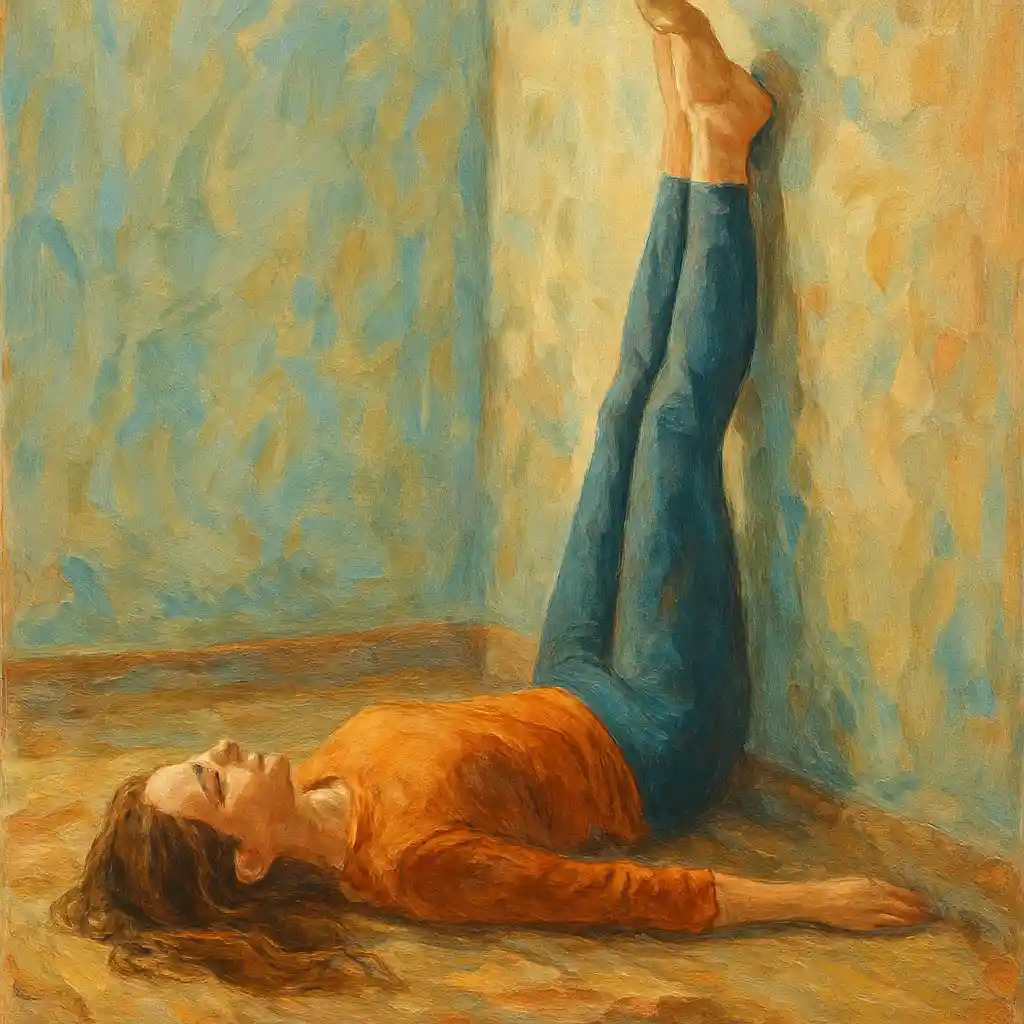
Waking up with neck pain can turn a new day into a struggle before it even starts. If you often feel stiff, tense, or restless at night, the Wall Legs-Up daily routine is a simple way to help your body relax, release built-up tension, and support better sleep. This gentle position uses gravity to encourage relaxation in your neck and shoulders, while also helping you unwind after a long day.
Small daily habits can create big comfort. Spending just 10–15 minutes with your legs up the wall can help you feel calmer at night and more refreshed in the morning.
This post explains why neck pain is common in seniors, how the Wall Legs-Up daily practice may help, and how to do it safely and comfortably at home.
Why Neck Pain Is So Common in Seniors
Neck pain is not just annoying—it can affect your mood, your movement, and your sleep. Many seniors notice that neck stiffness shows up more often with age, and it can be harder to “shake off” in the morning.
Common causes of neck pain in seniors
Neck pain can come from several everyday factors. Common causes include:
- Poor posture (for example, looking down at a phone or leaning forward while watching TV)
- Arthritis and normal wear-and-tear in joints
- Muscle strain from lifting, reaching, or sleeping in an awkward position
- Stress and tension that make neck and shoulder muscles tighten
Even when the cause is not serious, the discomfort can still affect your quality of life.
How neck pain affects daily life and sleep
Neck pain can make simple actions harder—turning your head, driving, reading, cooking, or even getting dressed. At night, it can be even worse. When you cannot find a comfortable position, sleep becomes lighter and more broken. Over time, poor sleep can increase stress, and stress can increase muscle tension. It can become a frustrating cycle.
How Wall Legs-Up Daily Helps Drain Tension Overnight
The Wall Legs-Up daily position is easy: you lie on your back and rest your legs up against a wall. It is gentle, simple, and does not require special equipment. Many people like it at bedtime because it feels calming and helps the body settle.
Why elevating your legs can support neck comfort
When you place your legs up the wall, your body is supported by the floor and wall. This can encourage a feeling of rest and ease. Many seniors notice that when the rest of the body relaxes, the neck and shoulders also soften. The position can feel like a “reset” after a day of sitting, standing, or carrying tension.
Improving circulation and reducing tension in the neck and shoulders
One reason people enjoy Wall Legs-Up daily is that it can feel soothing from head to toe. While you are resting, you may notice your breathing becomes slower and deeper. This calmer breathing often helps the shoulders drop and the jaw unclench—two areas that commonly hold tension connected to neck discomfort.
It is also a quiet moment to pause. When you stop moving and let your body be supported, it becomes easier to notice where you are holding tightness and to let it go.
Wall Legs-Up Daily Benefits for Seniors With Neck Pain
For many seniors, the best part of Wall Legs-Up daily is that it is both gentle and practical. You do not need to “push through” pain or do anything intense. You simply rest.
Here are the main benefits people often look for with this routine:
- Less neck and shoulder tension as the body relaxes
- Better sleep quality when done before bedtime as a calming wind-down
- A calmer nervous system through slow breathing and stillness
- Improved overall comfort after long periods of sitting or standing
Think of Wall Legs-Up daily as a bedtime “off switch.” It creates a quiet space for your body to settle so sleep can come more easily.
Setting Up Wall Legs-Up Daily for Success (Comfort Matters)
A good setup can make the difference between a position that feels relaxing and one that feels awkward. The goal is comfort, support, and ease—especially for seniors managing neck pain.
Choose the right wall space
Pick a quiet spot where you can lie down safely and comfortably. Helpful tips:
- Choose a wall area with enough space for your full body length.
- Use a clear floor space so you are not worried about bumping into furniture.
- If the floor is hard, consider a yoga mat, folded blanket, or carpeted area.
Use props like pillows or blankets for support
Props are not “cheating.” They are smart. They help you relax and keep good alignment.
- Under your head/neck: Use a thin pillow if you need it for comfort. Avoid pushing your chin too far forward.
- Under your hips/lower back: A folded blanket can add gentle support if your lower back feels strained.
- Under your arms: If your shoulders feel tight, rest your arms on small pillows so your shoulders can soften.
If you feel any sharp pain, numbness, or tingling, adjust your setup or stop and rest.
Step-by-Step: How to Do Wall Legs-Up Daily Safely
You do not need flexibility or strength to do this. The key is slow movement and comfortable positioning.
1) Get into position with good alignment
- Sit sideways near the wall, with one hip close to the wall.
- Slowly lower your back down to the floor.
- Gently swing your legs up so your calves and heels rest against the wall.
- Let your arms relax by your sides, palms up or down—whatever feels best.
Your body will form an “L” shape. Some people like their hips close to the wall; others prefer a small gap. Choose what feels comfortable for your lower back and hamstrings.
2) Elevate the legs comfortably (no forcing)
Your legs should feel supported, not strained. If you feel pulling behind the knees or discomfort in the hips, slide your body slightly away from the wall. If your lower back feels tense, try a folded blanket under the hips or bend your knees slightly.
3) Stay for 10–15 minutes
Most seniors do well with 10–15 minutes of Wall Legs-Up daily. This is long enough to feel relaxed without making you stiff.
While you rest:
- Breathe slowly and gently.
- Let your shoulders feel heavy against the floor.
- Relax your jaw and forehead.
When you are ready to come out, bend your knees, roll to one side, and use your hands to push yourself up slowly.
Wall Legs-Up Daily for Better Sleep: When and How to Use It
If your goal is to “drain tension overnight,” timing matters. Many people like to do Wall Legs-Up daily in the evening as part of a bedtime routine.
Best times to practice
- Before bed: Helps you unwind and transition into sleep.
- After a long day: A calming reset if you feel tight and stressed.
- During the day: A short break to reduce tension if your neck and shoulders feel tight.
Create a sleep-friendly environment
Small changes can make the practice feel more soothing:
- Dim the lights.
- Reduce noise or play soft, calming sounds.
- Keep the room comfortably warm.
- Turn off screens for a few minutes while you rest.
This helps your mind associate the routine with sleep and relaxation.
Real-Life Results: What Seniors Often Notice With Wall Legs-Up Daily
Many seniors who try Wall Legs-Up daily describe a similar pattern: the first benefit is usually a feeling of calm. Over time, they may notice less stiffness at night and a more comfortable start to the day.
Before and after: common experiences
- Before: Tight shoulders, stiff neck in the morning, restless nights, trouble getting comfortable.
- After (with consistency): Easier relaxation at bedtime, less tension held in the shoulders, improved comfort during sleep, and a calmer feeling at night.
Of course, every body is different. The goal is not perfection. The goal is relief and better rest.
Wall Legs-Up Daily Safety Precautions and When to Stop
Wall Legs-Up daily is gentle, but safety still matters—especially for seniors or anyone with health concerns.
Talk to a healthcare provider first
If you have ongoing neck pain, balance issues, or other medical conditions, it is wise to consult a healthcare provider before starting a new routine. This is especially important if your neck pain is severe, sudden, or getting worse.
Stop if you notice warning signs
Listen to your body. Stop the exercise if you feel:
- Dizziness or lightheadedness
- Sharp or shooting pain
- Shortness of breath that is unusual for you
- Numbness or tingling in your arms, legs, or neck area
Rest, hydrate if needed, and seek medical advice if symptoms continue.
Adjustments for health conditions or limitations
If you have limitations, you can still often do a modified version:
- Move farther from the wall to reduce strain in the back of the legs.
- Bend the knees slightly for comfort.
- Use more support under your head, arms, or hips.
- Shorten the time to a few minutes and build slowly.
The best version of Wall Legs-Up daily is the one that feels safe and comfortable for you.
Combine Wall Legs-Up Daily With Other Gentle Neck Relief Techniques
Wall Legs-Up daily works well on its own, but many seniors get better results when they pair it with other simple habits that reduce tension.
Add gentle neck stretches and easy movement
You can build a calm routine around your Wall Legs-Up daily practice. Consider gentle movements such as:
- Slow neck rotations (very small range, no forcing)
- Chin tucks
- Shoulder rolls
Keep movements smooth and comfortable. The goal is to reduce stiffness, not to push into pain.
Heat or cold therapy for extra comfort
Some seniors find it helpful to use heat or cold therapy along with their routine:
- Heat can feel soothing for tight muscles and stiffness.
- Cold can feel helpful if there is inflammation or soreness.
If you use heat or cold, keep it gentle and safe. If you are unsure what is best for your situation, ask a healthcare professional.
Mind-body tools: deep breathing, meditation, and stress reduction
Stress often shows up in the neck and shoulders. While doing Wall Legs-Up daily, try simple deep breathing:
- Breathe in slowly through your nose.
- Pause briefly.
- Breathe out slowly and gently.
This can help your body shift into a calmer state, which may reduce muscle tension and support better sleep.
How to Make Wall Legs-Up Daily a Habit (Without Losing Motivation)
The biggest benefits usually come from consistency. The good news is that Wall Legs-Up daily is easy to repeat because it does not require equipment, special clothing, or a lot of energy.
Simple tips to stay consistent
- Attach it to an existing habit: Do it after brushing your teeth or before you get into bed.
- Start small: Even a few minutes is a good start.
- Make it comfortable: Use pillows and blankets so you actually enjoy it.
- Keep it easy: Choose a spot in your home where setup is fast.
Overcoming common barriers
If you struggle with motivation, it helps to remove pressure. You do not have to do it perfectly. If 15 minutes feels like too much, do 5. If getting on the floor is hard, set up near a sturdy surface so you can move slowly and safely.
Consistency beats intensity. A gentle routine you can repeat is more helpful than a “perfect” routine you never do.
Maximizing the Benefits of Quality Sleep When You Have Neck Pain
Quality sleep supports your body’s ability to recover and manage discomfort. When your sleep improves, you may feel more patient, more mobile, and less tense during the day.
Why sleep matters for neck pain
When you do not sleep well, your body may feel more sensitive to discomfort. You may also hold more tension during the day. Using Wall Legs-Up daily as a calming bedtime habit can support relaxation and help you settle into rest more easily.
Create better neck support during daily activities
Neck pain is not only about what happens at night. Small daytime changes can also help:
- Adjust your sitting position so you are not leaning forward.
- Bring reading material up closer to eye level.
- Take short breaks to move your shoulders and neck gently.
These simple ergonomic adjustments may reduce the tension that builds up and shows up at bedtime.
FAQs About Wall Legs-Up Daily
Is Wall Legs-Up daily safe for seniors?
For many seniors, Wall Legs-Up daily is a gentle and accessible routine. Comfort and safety come first. If you have health conditions, ongoing pain, or concerns, consult a healthcare provider before starting.
How long should I do Wall Legs-Up daily?
A common and practical range is 10–15 minutes each day. If that feels like too much, start with a shorter time and build slowly.
What if I feel discomfort in my back or legs?
Try sliding slightly away from the wall, bending your knees, or adding a folded blanket for support. The position should feel restful, not painful.
Can Wall Legs-Up daily replace other treatments for neck pain?
Wall Legs-Up daily can be a helpful self-care tool, but it does not replace medical care. If your neck pain is severe, persistent, or worsening, seek professional guidance.
Conclusion: A Simple Daily Practice for Calmer Nights and Easier Mornings
If neck pain and tension are affecting your sleep, the Wall Legs-Up daily routine is a gentle, simple step you can try at home. With a comfortable setup, safe positioning, and consistent practice, many seniors find it easier to relax at night and wake up with less stiffness.
If you found this helpful, explore more of our sleep and mobility tips in the wellness section of our site and build a simple bedtime routine that supports your comfort every night.